 Save to Pinterest
 There's something about the sound of rice crisping in hot oil that makes me stop whatever I'm doing and pay attention. I discovered this bowl on a Tuesday afternoon when I had salmon in the fridge, yesterday's rice, and absolutely no plan. The combination of that golden, nutty rice against tender salmon felt like I'd accidentally stumbled onto something special, the kind of dish that tastes both effortless and intentional at once.
I made this for my friend Maya on a Friday when she was stressed about a project deadline, and watching her fork through that crispy rice with actual relief on her face told me everything. She asked for the recipe before finishing her bowl, which felt like the highest compliment.
Ingredients
- Salmon fillets (4, about 150 g each, skin removed): Look for fillets that smell like the ocean, not fishy, which means they're fresh and will cook beautifully.
- Jasmine or basmati rice (2 cups cooked, preferably cold leftover): Cold rice crisps infinitely better than warm rice, so plan ahead or chill it quickly in the freezer for 10 minutes.
- Olive oil (5 tablespoons total): Quality matters here since it's not hiding behind heavy sauces; use something you'd actually taste on bread.
- Red bell pepper (1, diced): The sweetness balances the briny olives and salty capers beautifully.
- Zucchini (1 small, diced): Cut into similar sizes as the pepper so everything cooks evenly and looks intentional on the plate.
- Red onion (1/2, thinly sliced): Don't skip this; the slight sharpness wakes up every other flavor in the bowl.
- Cherry tomatoes (1 cup, halved): Add these late so they stay bright and juicy rather than collapsing into the pan.
- Kalamata olives (1/2 cup pitted, halved): These bring umami depth and a salty punch that ties everything together.
- Capers (2 tablespoons, optional): If you use them, their briny kick is honestly worth the small extra step.
- Dried oregano (1 teaspoon): Rub it between your fingers before adding to wake up its oils and release more flavor.
- Greek yogurt (1/2 cup plain): Full-fat makes a silkier drizzle than low-fat versions.
- Lemon juice and zest (2 tablespoons juice, 1 teaspoon zest): Fresh lemon is non-negotiable; bottled juice tastes like sadness in comparison.
- Fresh dill or parsley (1 tablespoon chopped, plus more for garnish): Dill feels more Mediterranean and pairs perfectly with salmon, but parsley works if that's what you have.
- Sea salt and black pepper: Taste as you go; the olives and capers add saltiness, so you might need less than expected.
Tired of Takeout? 🥡
Get 10 meals you can make faster than delivery arrives. Seriously.
One email. No spam. Unsubscribe anytime.
Instructions
- Make the lemon-yogurt drizzle first:
- Whisk Greek yogurt with fresh lemon juice, zest, chopped dill, and a pinch of salt and pepper in a small bowl. This needs time in the fridge to meld, so getting it done early is genuinely helpful.
- Sauté the vegetables until they're tender but still have character:
- Heat oil in a large skillet over medium heat, then add peppers, zucchini, and red onion. After 4-5 minutes when they've softened slightly, add tomatoes, olives, capers, oregano, salt, and pepper for another 2-3 minutes. The kitchen will smell Mediterranean and alive.
- Crisp that rice until it's golden and nutty:
- In the same skillet, pour in oil over medium-high heat, then add cold rice in an even layer. Don't touch it for 6-8 minutes; this is where the magic happens. You want the bottom to turn golden brown and crispy, almost like a delicate crust.
- Pan-sear the salmon until it's just cooked through:
- Pat salmon dry with paper towels because moisture is the enemy of good sear marks, then season lightly. In a nonstick skillet with hot oil, cook 3-4 minutes per side until the surface is golden and the thickest part flakes gently with a fork.
- Build each bowl with intention:
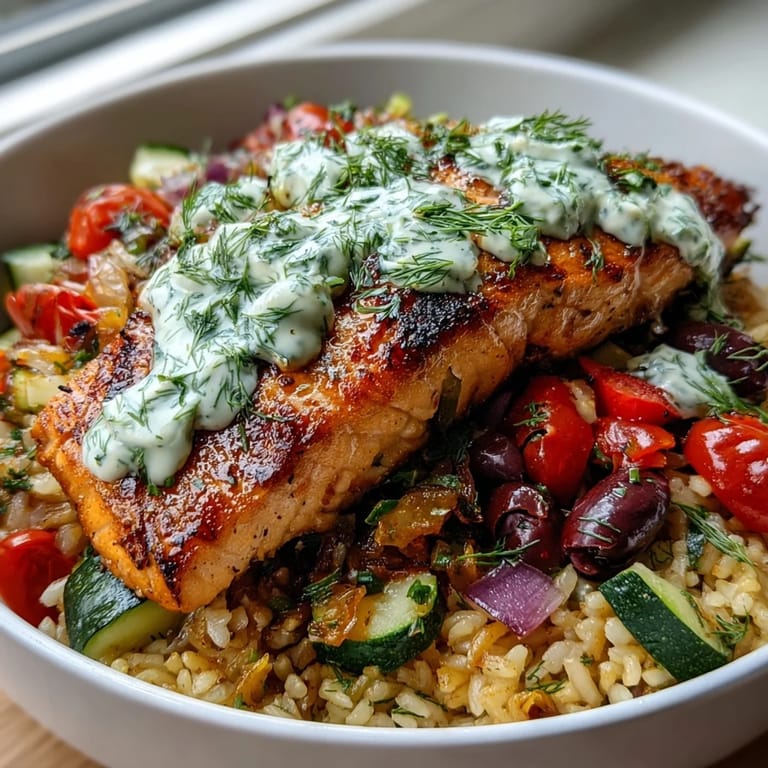
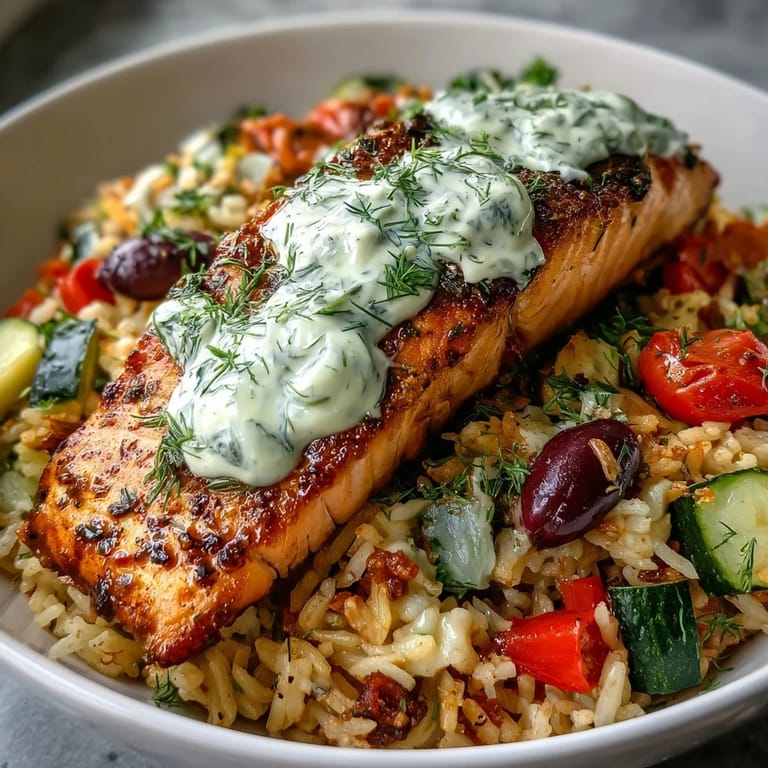
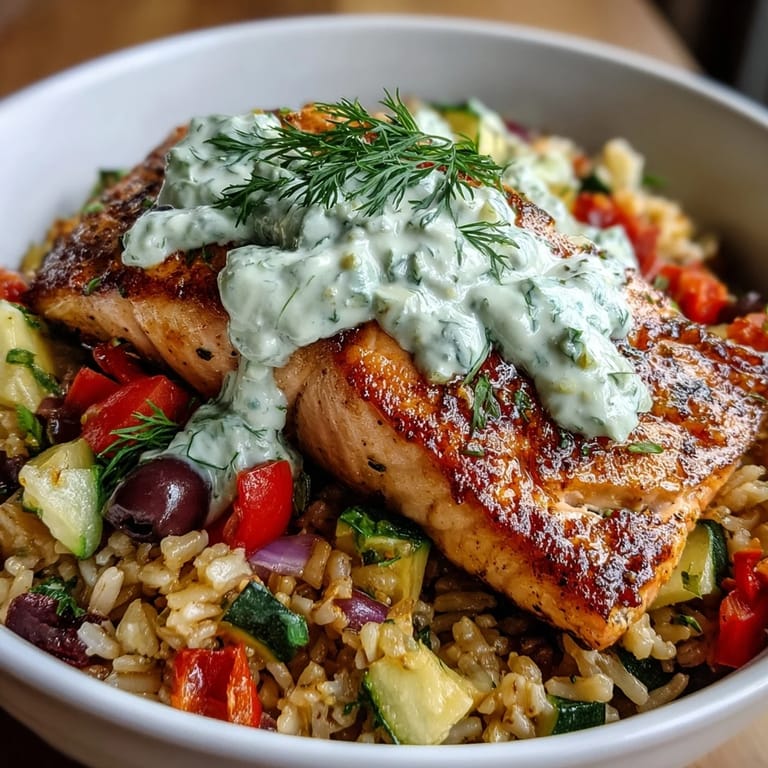
- Start with crispy rice as your base, top with warm sautéed vegetables, then nestle the salmon on top. Drizzle generously with the lemon-yogurt sauce, scatter fresh herbs, and serve with lemon wedges for people who want extra brightness.
 Save to Pinterest
 My neighbor smelled the salmon cooking through our shared wall and suddenly appeared at my door asking what smelled so good, which led to an impromptu dinner where we both realized how much we'd missed actually cooking something beautiful for another person. Food does that sometimes.
The Secret Behind Restaurant-Quality Salmon
The difference between salmon that's merely cooked and salmon that tastes like it came from somewhere special lives entirely in the pan temperature and timing. Too cool and you get gray, flabby fish; too hot and the outside burns while the inside stays raw. Medium-high heat with a nonstick skillet and just enough oil creates that perfect moment where the exterior crisps while the interior stays buttery and tender. I learned this the hard way after ruining exactly three salmon fillets before figuring it out.
Why Cold Rice Changes Everything
Warm rice contains moisture that turns into steam in the pan, which prevents crisping and creates mush instead. Cold rice, ideally stored in the fridge overnight or at least chilled in the freezer for 10 minutes, has a firm structure that browns beautifully and creates actual texture. This is genuinely one of those small technical points that separates a soggy bowl from one that feels like it came from a proper restaurant kitchen.
Building Layers of Flavor That Actually Work Together
Mediterranean cooking is about balance, and this bowl works because no single element overpowers the others. The salty olives and capers play against bright lemon, the creamy yogurt brings everything together, and the fresh herbs remind you that vegetables are supposed to taste like themselves. Each component serves a purpose beyond just filling space on the plate.
- Taste the drizzle before plating and adjust lemon or salt; this is your chance to make sure it's exactly right.
- If your vegetables are releasing too much liquid while sautéing, increase the heat slightly to evaporate it faster rather than letting them stew.
- Serve everything warm except the yogurt drizzle, which tastes better cool against the warm rice and salmon.
 Save to Pinterest
 This bowl has become my answer to the question of what to make when I want to feel like I'm taking care of myself and the people I'm cooking for. It's the kind of meal that tastes special enough for company but straightforward enough for a regular Tuesday.
Recipe FAQs
- → What rice works best for achieving crispy texture?
Cold, leftover jasmine or basmati rice delivers the crispiest results. The grains dry out overnight in the refrigerator, allowing them to develop a golden crunch when pan-fried without becoming mushy.
- → Can I prepare the components ahead of time?
Yes. The vegetables can be sautéed and refrigerated for up to 2 days, and the lemon-yogurt sauce stays fresh for 3-4 days. Cook the salmon and rice fresh for optimal texture and flavor.
- → How do I know when the salmon is perfectly cooked?
The salmon is done when it flakes easily with a fork and reaches an internal temperature of 145°F (63°C). The flesh should appear opaque and slightly pink in the center, with golden, crispy edges.
- → What substitutions work well for this bowl?
Swap salmon with chicken thighs, firm tofu, or shrimp. For dairy-free, use coconut yogurt in the drizzle. Additional vegetables like eggplant, cucumber, or roasted eggplant complement the Mediterranean profile.
- → Why does my rice turn out soft instead of crispy?
Excess moisture prevents crisping. Use thoroughly drained, cold rice and avoid overcrowding the pan. Let the rice cook undisturbed for 6-8 minutes to develop a golden crust before flipping.