 Save to Pinterest
 I was standing at the butcher counter on a gray December afternoon, watching him wrap four massive lamb shanks in brown paper. My neighbor had just told me about her grandmother's slow-roasted lamb, and I couldn't shake the image of tender meat falling off the bone. That night, I filled my heaviest pot with wine, stock, and rosemary, slid it into the oven, and let the hours do the work. The smell that filled my kitchen was enough to make me believe in magic.
I made this for a small holiday dinner the first winter I hosted alone. My friends arrived to find the table set and the lamb still braising, filling the room with rosemary and red wine. When I lifted the lid and the steam rose up, someone gasped. We ate slowly that night, savoring every bite, and I realized this dish had turned my nervous hosting into something warm and memorable.
Ingredients
- Lamb shanks: Look for shanks with a good amount of meat and a bit of marbling, they'll stay moist and flavorful during the long roast.
- Carrots and celery: These vegetables sweeten as they braise and soak up all the savory flavors from the lamb and wine.
- Onion: I slice mine thick so it holds its shape and adds a soft, caramelized sweetness to the sauce.
- Garlic cloves: Smashing them releases their flavor without turning bitter, and they melt into the braising liquid.
- Fresh rosemary: This is the star herb here, woody and piney, it clings to the lamb and perfumes everything.
- Fresh thyme and bay leaves: They add layers of earthy, subtle warmth that balance the richness of the meat.
- Beef or lamb stock: Use a good quality stock, it becomes the backbone of your sauce.
- Dry red wine: I usually grab a Cabernet or Merlot, something I'd actually drink, and it adds depth and complexity.
- Olive oil: Just enough to get a beautiful sear on the shanks before they go into the oven.
- Kosher salt and black pepper: Season generously, the meat needs it to develop flavor from the inside out.
Tired of Takeout? 🥡
Get 10 meals you can make faster than delivery arrives. Seriously.
One email. No spam. Unsubscribe anytime.
Instructions
- Preheat and prep:
- Set your oven to 160°C (320°F) so it's ready when you need it. Pat each lamb shank completely dry with paper towels, this helps them brown beautifully.
- Season the lamb:
- Sprinkle salt and pepper all over the shanks, don't be shy. I like to press the seasoning into the meat with my hands so it really sticks.
- Sear the shanks:
- Heat olive oil in your Dutch oven over medium-high until it shimmers, then add the shanks and sear each side until deep golden brown, about 8 minutes total. The sizzle and the smell of browning meat is the best part of this step.
- Sauté the vegetables:
- Remove the lamb and set it aside, then toss in the onions, carrots, celery, and garlic. Stir them around in all that flavorful oil until they soften and smell sweet, about 4 to 5 minutes.
- Build the braise:
- Nestle the lamb shanks back into the pot among the vegetables, then tuck in the rosemary, thyme, and bay leaves. Pour in the wine and stock, and bring everything to a gentle simmer, scraping up any browned bits from the bottom.
- Roast low and slow:
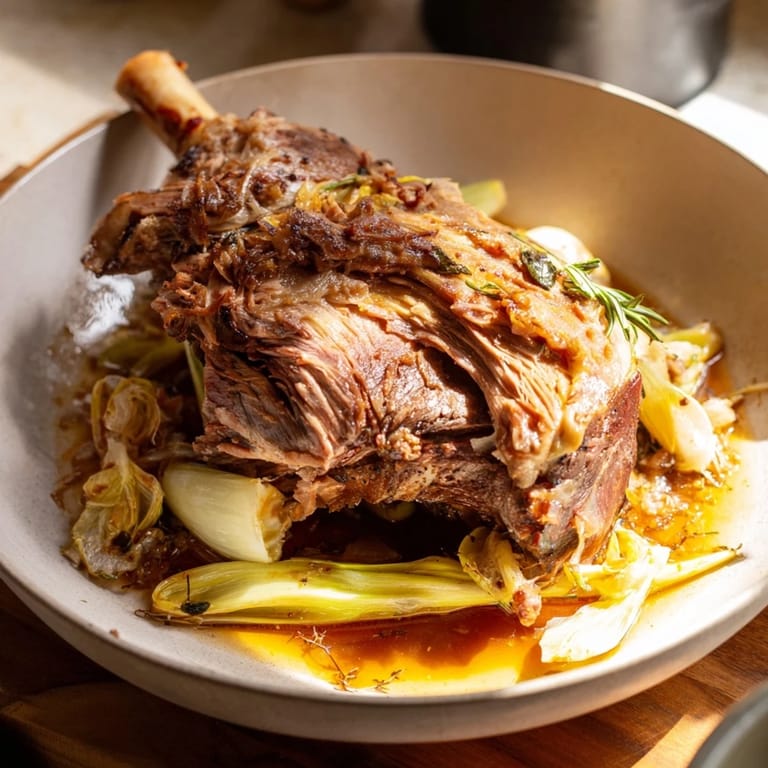
- Cover the pot tightly with a lid or foil and slide it into the oven. Let it roast for 2 ½ to 3 hours, turning the shanks once halfway through, until the meat is so tender it's falling off the bone.
- Finish the sauce:
- Carefully lift the lamb and vegetables onto a serving platter. Skim off any excess fat from the sauce, then simmer it on the stovetop for a few minutes if you want it thicker and glossier.
- Serve:
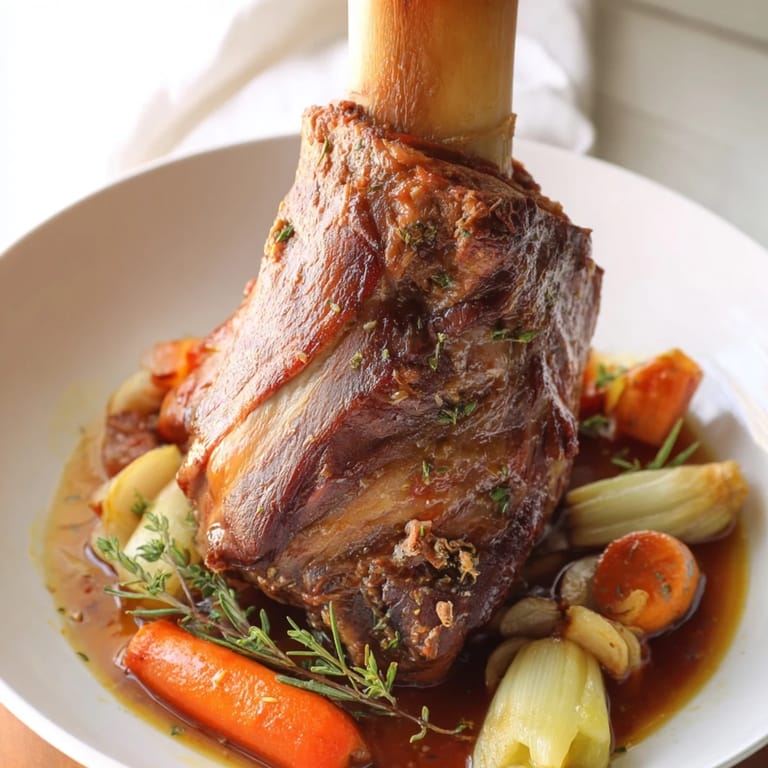
- Spoon the rich, aromatic sauce over the lamb shanks and bring it to the table while it's still steaming hot.
 Save to Pinterest
 The first time I made this, I served it with mashed potatoes so creamy they could have been dessert. My dad reached for seconds before he'd even finished his first plate. He didn't say much, but he looked at me like I'd finally figured something out. That quiet moment, watching him enjoy every bite, is one I carry with me every time I make this dish.
Serving Suggestions
I love pairing these lamb shanks with creamy mashed potatoes or soft polenta to soak up all that gorgeous sauce. A simple arugula salad with lemon on the side cuts through the richness perfectly. For a heartier spread, roasted root vegetables or crusty bread for dipping make it feel like a true feast.
Make-Ahead Magic
This is one of those rare dishes that actually tastes better the next day. I'll often braise the shanks a day ahead, let everything cool, then cover and refrigerate overnight. The fat solidifies on top so you can lift it off easily, and the flavors meld together into something even richer. Just reheat gently in the oven or on the stovetop before serving.
Flavor Twists and Variations
If you want a little brightness, toss in a strip of orange zest during the braise, it adds a subtle citrus note that's wonderful. A splash of balsamic vinegar at the end deepens the sauce and gives it a hint of sweetness. I've also swapped the red wine for white when I wanted something lighter, and it worked beautifully with extra lemon and thyme.
- Add a strip of orange zest or a splash of balsamic for extra depth.
- Use white wine and lemon if you prefer a lighter, brighter braise.
- Stir in a spoonful of Dijon mustard to the sauce for a subtle tang.
 Save to Pinterest
 This lamb has become my go-to when I want to impress without stress. There's something deeply satisfying about pulling that pot from the oven and knowing you've created something unforgettable.
Recipe FAQs
- → What is the best cut of meat for this dish?
Lamb shanks are ideal due to their rich flavor and connective tissue that breaks down during slow roasting, resulting in tender meat.
- → How long should I cook the lamb shanks?
Roast the lamb shanks for 2½ to 3 hours at a low temperature until the meat is tender and falling off the bone.
- → Can I prepare this dish ahead of time?
Yes, the flavors deepen if made a day in advance. Reheat gently before serving to preserve moisture.
- → What are good side dishes to serve with slow-roasted lamb?
Creamy mashed potatoes, polenta, or roasted root vegetables complement the rich flavors perfectly.
- → How do I thicken the sauce after roasting?
Skim excess fat from the sauce and simmer it on the stovetop until it reduces and thickens slightly.