 Save to Pinterest
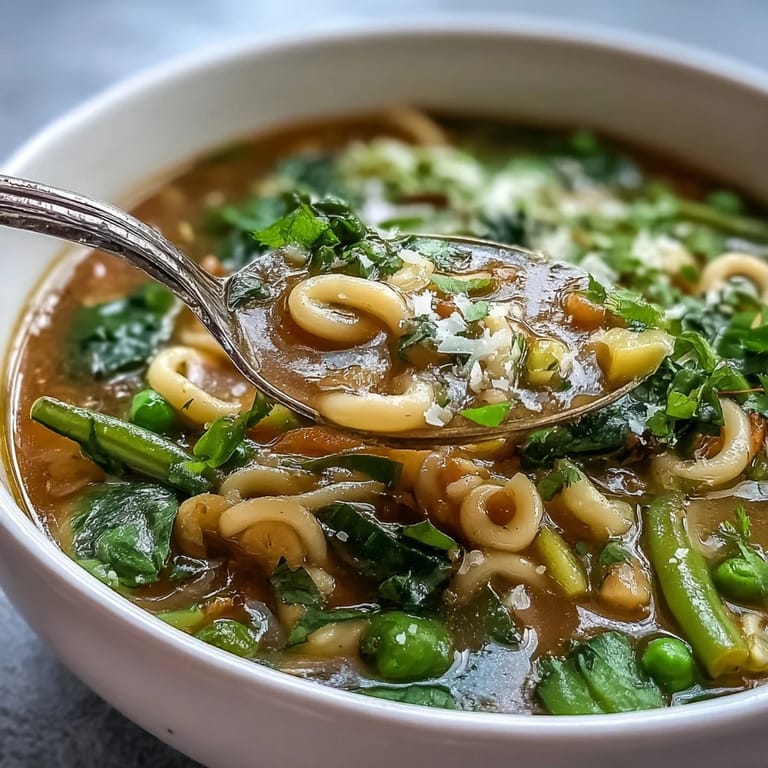
 Sometimes there’s an unmistakable energy in the kitchen when spring produce first shows up at the market—bold greens, zingy herbs, all those young vegetables practically asking to be chopped. I threw together my first Spring Minestrone one evening as a happy accident, intending to use up the odds and ends left in my crisper. The aroma of garlic and olive oil mingling with just-blanched green beans filled the apartment, and it felt like I’d cracked open a window to let the fresh season drift right in. Quick, bright, and impossibly green, this soup has become my signal that winter is officially behind us.
Making this soup for a picnic lunch last May, I remember my two friends hovering over the pot, sneaking tastes and guessing the ingredients. That day, the kitchen windows were open and the smell of simmering broth drifted out into the courtyard, which for once made us more popular than whoever was grilling next door. We laughed about how all the chopping turned into a sort of assembly line—someone crying over onions, another distracted by fresh basil leaves. I ended up doubling the batch just to keep up with requests for seconds.
Ingredients
- Olive oil: Fragrant and peppery, it’s essential for coaxing out extra flavor from the vegetables in the very first step.
- Onion: Chopped fine so it melts into the broth, providing a gentle base rather than hogging the spotlight.
- Garlic: Add it just after the onions—if it browns, it can turn bitter, so timing is key.
- Carrots: Their sweetness builds as they soften, a subtle contrast to the briny green beans.
- Celery: Adds freshness and crunch in the early bites before everything melds together.
- Zucchini: Sliced last minute to keep it from going mushy; I like to leave the skin on for extra color.
- Green beans: Give the soup its trademark snap and shape; don’t cut them too small or you’ll lose the texture.
- Peas: I throw in frozen if that’s all I have—it still delivers that burst of springy sweetness.
- Spinach: Stirred in at the last moment so it stays vibrant and just wilts, never disappears.
- Vegetable broth: A good quality low-sodium broth is worth seeking out, or make your own if you’re feeling ambitious.
- Bay leaf: It makes its quiet magic in the background; just don’t forget to fish it out.
- Pasta: Small shapes are best—they soak up flavor without overtaking the vegetables.
- Fresh parsley: Chopped right before adding—if you do it too early, the flavor fades.
- Salt and black pepper: Taste as you go, since all broths and veggies are different.
- Parmesan cheese (optional): Adds richness; for vegans, swap in nutritional yeast or a dairy-free hard cheese.
- Fresh basil leaves: Torn over the finished soup brings an aromatic, peppery top note.
- Extra olive oil for drizzling: A little swirl takes it from good to great.
Tired of Takeout? 🥡
Get 10 meals you can make faster than delivery arrives. Seriously.
One email. No spam. Unsubscribe anytime.
Instructions
- Start with the Flavor Base:
- Heat olive oil in your biggest soup pot—listen for the gentle sizzle—then add onion and let it cook until translucent, about 2-3 minutes.
- Sauté the Aromatics:
- Stir in garlic, carrots, and celery, and let everything soften while the room fills with earthy sweetness, 4 minutes should do it.
- Add the Spring Veggies:
- Now, toss in zucchini, green beans, and peas; give them a quick stir and only cook for 2 minutes so they stay tender-crisp.
- Pour and Simmer:
- Pour in all that veggie broth and drop in the bay leaf (don’t lose sight of it for later); bring it all to a lively boil, then gently lower to a simmer.
- Pasta Time:
- Stir in your chosen pasta and set a timer; let it cook until al dente, typically 8–10 minutes, depending on the shape.
- Herbs & Spinach to Finish:
- About two minutes before the pasta’s done, add spinach and fresh parsley; stir so the leaves wilt but keep their color.
- Season and Final Touches:
- Sprinkle in salt and pepper, then taste and adjust—remove the bay leaf so no one gets a surprise at the table.
- Ready to Serve:
- Ladle out into bowls, add a dusting of Parmesan and some basil if you like, and always, always finish with a drizzle of olive oil.
 Save to Pinterest
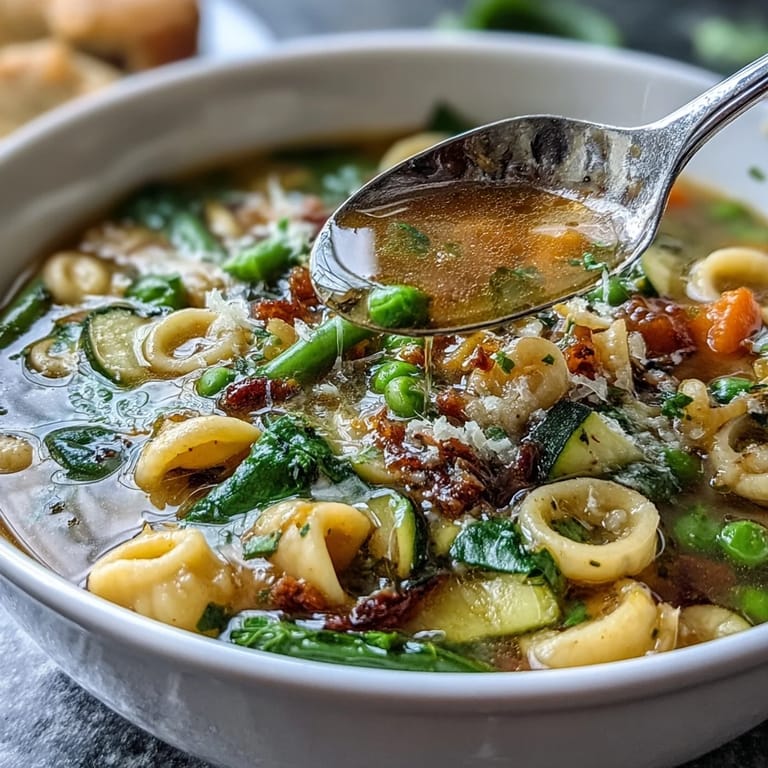
 There’s a late afternoon I’ll never forget: my neighbor waved through the window, drawn by the color of the soup as I spooned it up. We ended up sharing two steaming bowls on my porch, swapping gardening tips and stories as the sun dipped down. The soup was the conversation starter, but it was laughter that lingered when the bowls were empty.
How to Switch Up Your Spring Vegetables
If you spy asparagus or fava beans at the market, don’t hesitate—chop them in and give the minestrone your own signature twist. Subbing in whatever looks perky or needs using makes this recipe endlessly adaptable. Even a handful of kale in place of spinach works wonders, and a tiny squeeze of lemon brightens the flavors at the end.
Making It Ahead and Storing Leftovers
Spring Minestrone holds up beautifully in the fridge, and I swear it tastes even brighter on day two when the veggies soak up more of the broth. Store pasta and soup separately if you can—just ladle the broth and veggies over hot pasta when you’re ready to eat to avoid sogginess.
Serving Ideas and Final Flourishes
A soup this cheerful deserves a little pomp—try serving with grilled bread rubbed with garlic or a handful of peppery arugula on the side. Sometimes, I’ll pile on extra fresh herbs or offer vegan Parmesan so everyone can customize their bowl at the table.
- Always remove the bay leaf—it’s easy to forget!
- If doubling or tripling, go easy on the pasta so the broth doesn’t vanish.
- A tiny swirl of olive oil brings out all the fresh flavors right before serving.
 Save to Pinterest
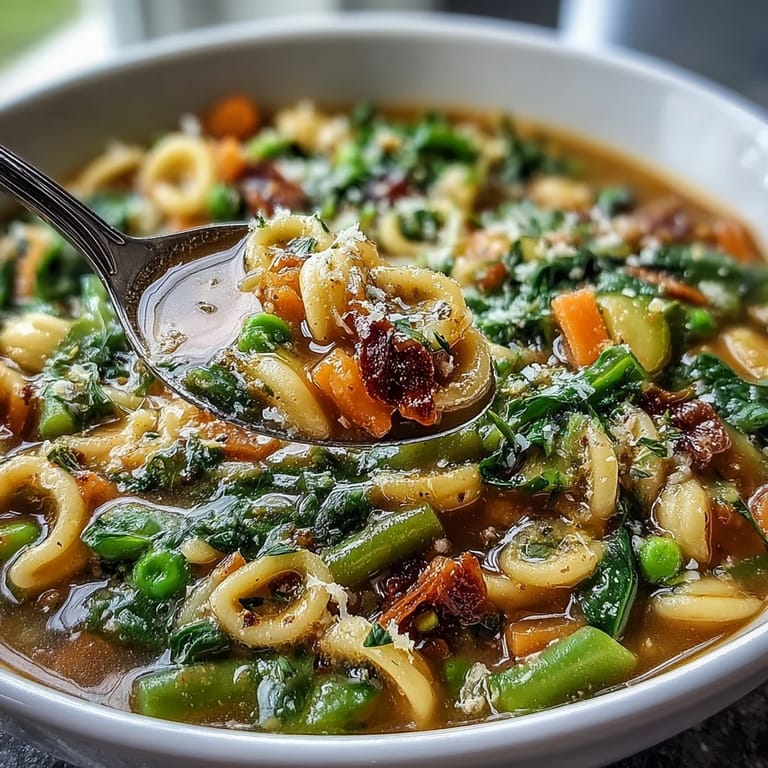
 May this Spring Minestrone fill your kitchen with light and your table with color. Here’s to making the most of the season’s best, one bowl at a time.
Recipe FAQs
- → Can this be made vegan?
Yes — omit the Parmesan or use a plant-based alternative. Use vegetable broth and double-check any store-bought pasta for egg content to keep it fully plant-based.
- → Which pasta shape works best and how long to cook it?
Small shapes like ditalini, orzo or small shells are ideal. Follow package directions and aim for al dente—usually 8–10 minutes—so the pasta keeps texture when served.
- → How do I prevent vegetables from becoming mushy?
Sauté firmer vegetables first (carrots, celery) and add tender items (zucchini, peas, spinach) later. Keep simmering gentle and add delicate greens in the final 2 minutes so they just wilt.
- → Can I freeze the soup?
You can freeze the broth and vegetables, but cooked pasta often becomes soft when frozen and reheated. For best texture, freeze without pasta and add freshly cooked pasta when reheating.
- → How can I boost the flavor if the broth tastes flat?
Adjust salt gradually, finish with a splash of good olive oil or a squeeze of lemon for brightness, and stir in fresh herbs like parsley or basil just before serving to lift the flavors.
- → What are good seasonal swaps?
In spring add asparagus or fava beans; in summer increase tomatoes or corn. In cooler months use root vegetables and heartier greens. Adjust cooking order for denser items so everything finishes evenly.