 Save to Pinterest
 The first time I made zaatar focaccia, I was standing in a spice market in Tel Aviv, watching a vendor expertly blend dried herbs and sumac with the precision of a conductor. That dusty, tangy zaatar scent followed me home, and I became obsessed with capturing it in bread. My Italian grandmother's focaccia recipe met Middle Eastern tradition on my kitchen counter, and somehow it felt like the most natural bridge between two kitchens I loved.
I served this to my neighbors last summer during a spontaneous Sunday gathering, and the warm, oil-glistening loaf came out of the oven just as they arrived. Someone tore into a piece without asking and closed their eyes—I didn't need a compliment, just that moment of pure satisfaction. That bread became the reason we started doing weekly gatherings.
Ingredients
- Bread flour (500 g): This needs protein to develop structure and those delicate air pockets that make focaccia so irresistible; don't substitute with all-purpose if you want real lift.
- Active dry yeast (7 g): Use fresh yeast if you can, and always bloom it in warm water first to confirm it's alive and ready to work.
- Fine sea salt (1½ tsp for dough): This dissolves seamlessly into the dough and seasons from within, unlike coarser salt which can inhibit yeast.
- Warm water (325 ml): Temperature matters more than you'd think—too hot kills the yeast, too cold and it won't wake up; aim for 40°C, about as warm as a comfortable bath.
- Extra virgin olive oil (60 ml plus 2 tbsp): This is your secret ingredient for flavor and tenderness; splurge on a good bottle because it defines the final taste.
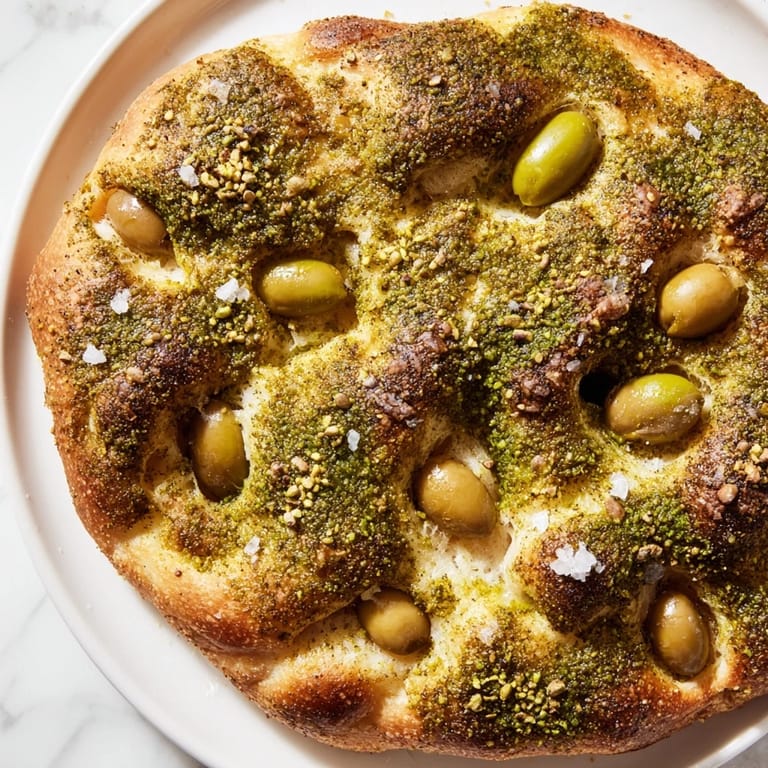
- Zaatar spice blend (2 tbsp): This tangy, herbaceous blend is the heart of the dish; if yours tastes musty, it's old—buy from a source with high turnover.
- Kalamata olives (100 g): The brininess cuts through richness and adds those pockets of intensity that make each bite interesting; halving them helps distribute flavor more evenly.
- Flaky sea salt (1 tsp): This finishing touch should be larger granules that catch light and add a delicate crunch on top.
Tired of Takeout? 🥡
Get 10 meals you can make faster than delivery arrives. Seriously.
One email. No spam. Unsubscribe anytime.
Instructions
- Bloom your yeast:
- Dissolve the yeast in warm water and wait 5 minutes—you should see it foam up like a tiny, alive galaxy. This proves the yeast is viable and ready to work its magic.
- Build the dough base:
- Combine flour and salt, then add your foamy yeast mixture and olive oil, mixing until everything comes together in a shaggy, slightly wet mess. Don't worry about smoothness yet; that's the knead's job.
- Knead until silky:
- Spend 8–10 minutes kneading by hand or machine, and you'll feel the transformation—the dough goes from rough to smooth and elastic, almost like skin. You'll know it's ready when it springs back when you poke it.
- First rise:
- Nestle the dough in an oiled bowl, cover it, and let it rise in a warm, undisturbed spot for about 1 hour or until it's roughly doubled. A kitchen away from drafts works beautifully.
- Shape and second rise:
- Oil your pan, punch down the dough to release gas, and press it evenly into the pan with your fingertips and palms—don't use a roller, you want those little dimples to start forming naturally. Cover and let it rise another 30 minutes.
- Create the dimple landscape:
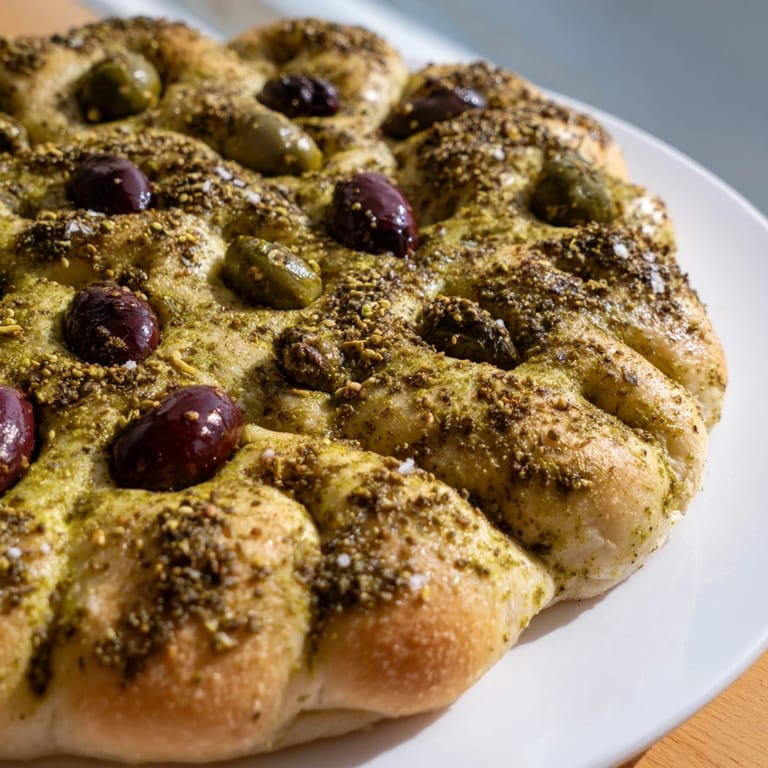
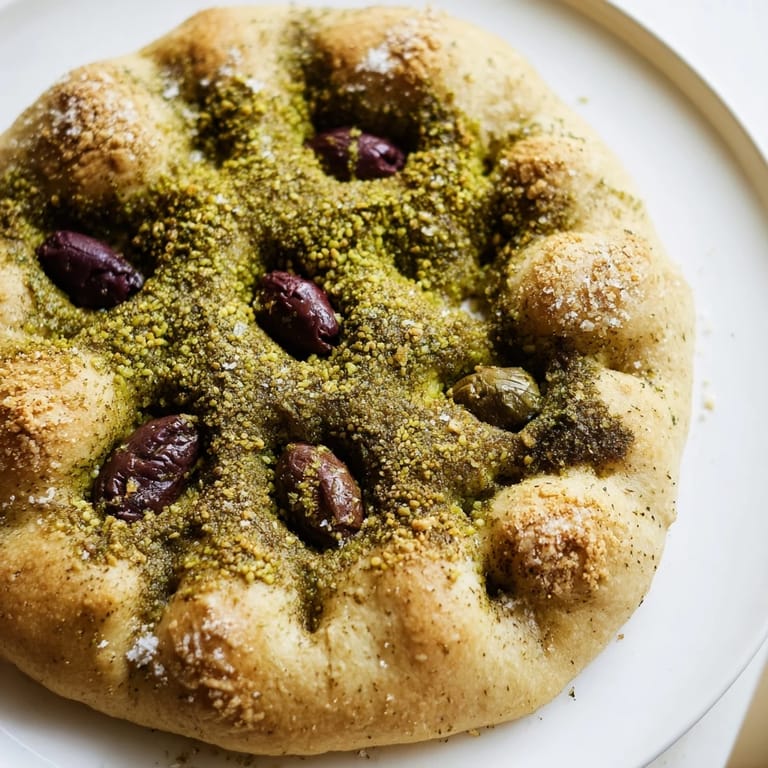
- Using your fingers or a wooden spoon handle, press deep dimples all over the dough, almost like you're creating little wells for the toppings to nestle into. Don't be shy; these dimples are part of focaccia's charm.
- Top with intention:
- Drizzle generously with olive oil, scatter zaatar across the surface, distribute your olive halves, and finish with flaky salt. Let it sit for a moment so the toppings settle into those dimples.
- Bake until golden:
- Slide into a preheated 220°C oven and bake for 20–25 minutes until the edges are crispy and the top is a warm golden-brown. The kitchen will smell absolutely incredible.
- Cool and serve:
- Let it rest for a few minutes so the structure sets, then slice and serve warm or at room temperature. Leftover focaccia tastes just as good tomorrow, though rarely lasts that long.
 Save to Pinterest
 There was a moment, pulling this from the oven, when my daughter wandered in and said the smell made her feel like we were somewhere else entirely—somewhere warm and ancient and full of story. That's when I understood this bread isn't just food; it's a small edible conversation between cultures.
The Magic of Zaatar
Zaatar is a flavor bomb disguised as a humble spice blend—it's tangy from sumac, herbaceous from dried oregano and thyme, nutty from sesame seeds, and there's something almost floral underneath. I once made this focaccia with old zaatar that had been sitting in my pantry for two years, and the bread was flat and forgettable. Fresh zaatar transforms the entire loaf into something bright and crave-worthy, so don't underestimate the ingredient's shelf life.
Why Focaccia Shape Matters
Focaccia is uniquely forgiving because its shallow shape means more crust and more surface area for toppings to adhere to. I used to overthink the shaping, but the truth is simpler—it just needs to be pressed evenly into the pan so it bakes uniformly. When I stopped worrying about perfection and started making dimples with my fingers like I was having a conversation with the dough, everything improved.
Serving Suggestions and Pairings
This bread is a natural partner for dips and spreads, but it also stands beautifully on its own as an appetizer or snack. I've served it alongside hummus, labneh, and a small dish of herbaceous olive oil for dipping, and it becomes the centerpiece of the table without trying. Warm or at room temperature, it's equally magical.
- Pair with creamy labneh and fresh vegetables for a light lunch that feels indulgent.
- Serve alongside soups or grain bowls to soak up every last drop of flavor.
- Toast leftover slices and use them as the base for bruschetta or a Mediterranean bread salad.
 Save to Pinterest
 This focaccia reminds me that the best recipes are the ones that connect us—to other cultures, to people we cook for, and to quiet moments in the kitchen when something rises and becomes more than it was. Make this bread and let it be that bridge.
Recipe FAQs
- → What makes the focaccia fluffy?
Slow rising of the dough and thorough kneading develop gluten, creating a light and airy texture.
- → How does zaatar influence the flavor?
Zaatar adds a fragrant, herbal, and slightly tangy note that complements the olive oil and olives beautifully.
- → Why dimple the dough before baking?
Dimples hold olive oil and toppings in place during baking, enhancing flavor and texture.
- → Can I use different olives?
Yes, green olives provide a milder taste if you prefer less briny flavor.
- → How should this bread be served?
Best slightly warm or at room temperature, paired with dips like hummus or labneh for added taste.
- → How long can the bread be stored?
It’s best consumed the same day but can be gently reheated in a warm oven later.