 Save to Pinterest
 I was standing in my kitchen one late summer evening when a friend dropped off a bag of eggplants from her garden. I had no plan, just a vague craving for something bright and cooling. I roasted them simply, then tore through my fridge for yogurt and whatever looked alive. The pomegranate seeds were left over from breakfast. When I plated it all together, the colors alone made me smile.
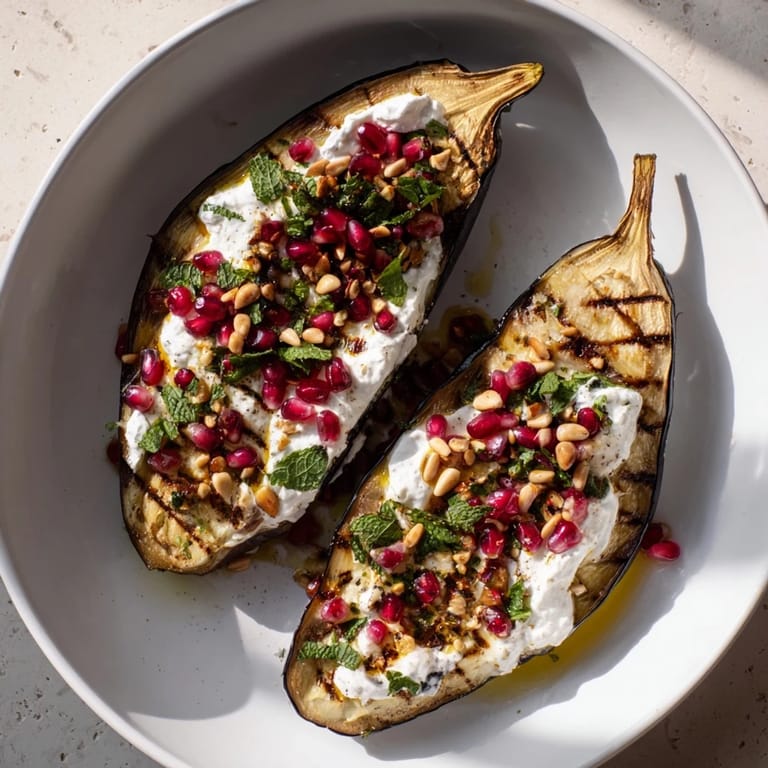
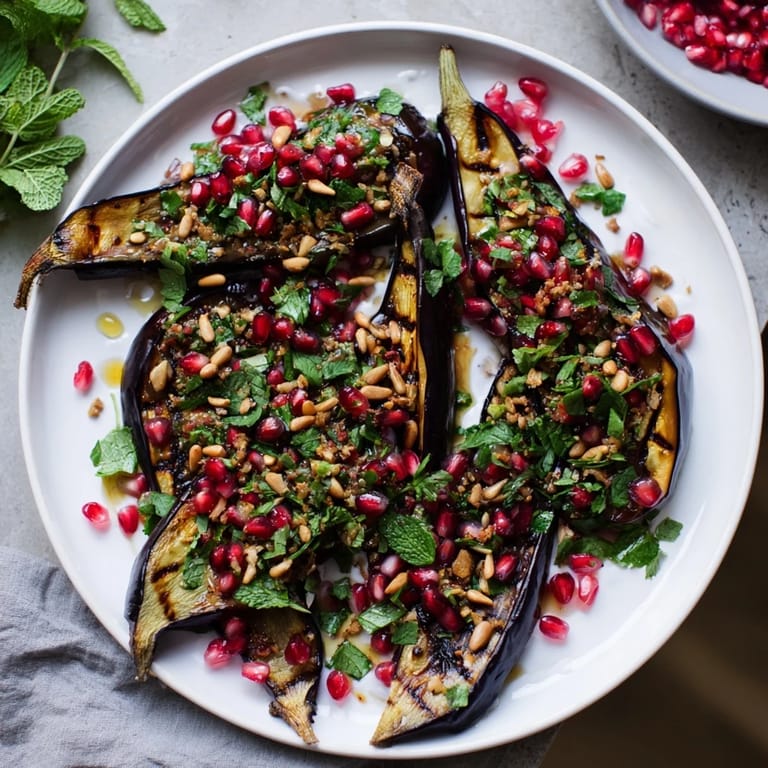
The first time I made this for a dinner party, someone asked if I had trained in the Middle East. I laughed and said no, just a Tuesday and some good olive oil. But I did learn that presentation matters. When you arrange the eggplant on a wide platter and scatter the toppings unevenly, it looks like something out of a cookbook without any fuss.
Ingredients
- Eggplants: Choose firm, glossy ones with smooth skin. Scoring the flesh in a crosshatch helps them cook evenly and soak up the oil.
- Olive oil: Don't skip the generous brush. Eggplant is like a sponge and needs fat to caramelize properly.
- Greek yogurt: Full-fat gives you a richer sauce, but low-fat works if you want to keep it lighter. Just make sure it's thick and tangy.
- Garlic: Grating it finely into the yogurt distributes the flavor without any harsh bites.
- Lemon juice: Freshly squeezed is best. It wakes up the yogurt and keeps everything tasting bright.
- Pomegranate seeds: They add sweetness, tartness, and a little crunch. I buy them pre-seeded when I'm lazy.
- Fresh mint and parsley: The herbs bring a green, grassy contrast to the roasted warmth. Chop them just before serving.
- Pine nuts: Toasting them in a dry pan for a few minutes makes them nutty and golden. Watch them closely, they burn fast.
- Sumac: This optional spice has a lemony, floral note that ties everything together beautifully.
Tired of Takeout? 🥡
Get 10 meals you can make faster than delivery arrives. Seriously.
One email. No spam. Unsubscribe anytime.
Instructions
- Prep the oven and eggplant:
- Preheat to 220°C (425°F) and line a baking sheet with parchment. Score the cut sides of the eggplant in a crosshatch, then brush generously with olive oil and season with salt and pepper.
- Roast until golden:
- Place the eggplant halves cut side up on the sheet and roast for 35 to 40 minutes. They should be deeply golden, soft enough to collapse under a spoon, and smell sweet and smoky.
- Make the yogurt sauce:
- While the eggplant roasts, whisk together Greek yogurt, grated garlic, lemon juice, olive oil, and salt in a bowl until smooth. Taste it and adjust the lemon or salt if needed, then refrigerate.
- Assemble and garnish:
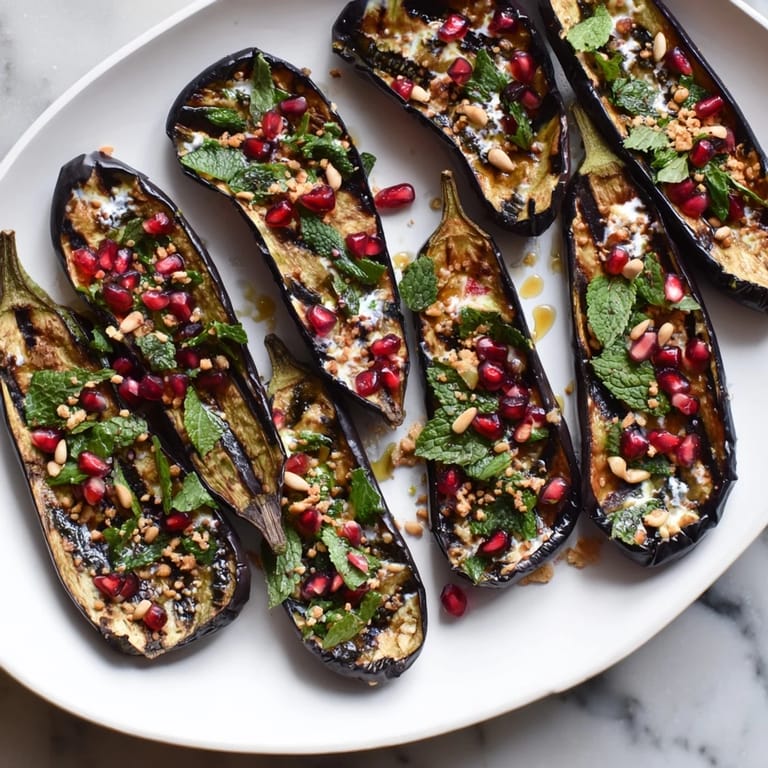
- Let the roasted eggplant cool for a few minutes, then transfer to a serving platter. Spoon the yogurt sauce over the top, then scatter pomegranate seeds, fresh mint, parsley, toasted pine nuts, and a pinch of sumac if using.
- Serve:
- Serve warm or at room temperature. It's wonderful with warm flatbread or as part of a mezze spread.
 Save to Pinterest
 One evening I served this to my neighbor who said she hated eggplant. She ate two halves and asked for the recipe. I realized then that roasting changes everything. The bitterness disappears, the texture becomes creamy, and suddenly it's not the vegetable people avoid. It's the one they ask for again.
What to Serve It With
This dish works as a main for two or a side for four. I like it with warm pita, a simple cucumber salad, and maybe some hummus on the side. It also fits beautifully into a mezze spread alongside baba ganoush, tabbouleh, and olives. If you want to make it heartier, serve it over couscous or bulgur.
How to Store and Reheat
Store the roasted eggplant and yogurt sauce separately in airtight containers in the fridge for up to three days. Reheat the eggplant gently in the oven at 180°C (350°F) for about 10 minutes. Add the yogurt sauce and fresh toppings just before serving so everything stays vibrant and cool.
Ways to Change It Up
If you want a bit of heat, brush the eggplant with harissa or sprinkle it with cumin before roasting. For a vegan version, swap Greek yogurt for a thick plant-based yogurt. You can also add crumbled feta or labneh on top for extra richness. Some people like to drizzle tahini over everything at the end, and honestly, that works too.
- Try adding a handful of toasted walnuts instead of pine nuts for a different texture.
- A drizzle of pomegranate molasses over the finished dish adds a sweet-tart glaze that's gorgeous.
- If you can't find sumac, a little extra lemon zest does the trick.
 Save to Pinterest
 This recipe taught me that vegetables don't need to be complicated to feel special. A little heat, some good oil, and a few bright toppings can turn something simple into a dish people remember.
Recipe FAQs
- → How should the eggplant be prepared before roasting?
Score the eggplant halves in a crosshatch pattern, then brush generously with olive oil and season with salt and pepper to enhance flavor and ensure even roasting.
- → What is the purpose of the yogurt sauce in this dish?
The yogurt sauce adds creamy tanginess and moisture, balancing the roasted eggplant’s natural sweetness with lemon, garlic, and olive oil.
- → Can the pine nuts be toasted before adding?
Yes, toasting pine nuts in a dry skillet for 2–3 minutes brings out their nutty aroma and adds crunch to the toppings.
- → Are there common variations to enhance the flavors?
Brushing the eggplant with harissa or sprinkling ground cumin before roasting adds depth and a hint of spice if desired.
- → How is this dish best served?
It pairs well with warm flatbread or as part of a mezze spread and can be served warm or at room temperature for versatile enjoyment.