 Save to Pinterest
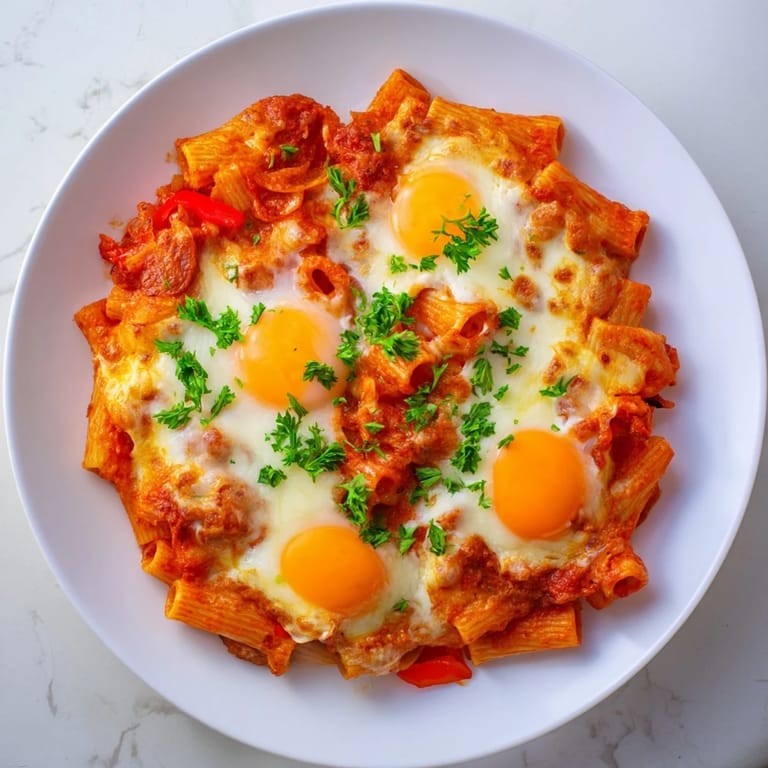
 There's something magical about the moment when a dish stops being about technique and becomes about comfort. I was making pasta one Tuesday evening, standing at the stove with a can of tomatoes and thinking about all those mornings I'd eaten shakshuka for breakfast in a small café in Tel Aviv. Why couldn't pasta have that same smoky, spiced soul? That's when this dish was born—a happy collision between two worlds that somehow felt like it had always belonged together.
I served this to my friend Marcus on a Friday night when he arrived hungry and skeptical about my latest kitchen experiment. He took one bite, broke that golden yolk into the sauce, and went completely quiet—the kind of quiet that means you've gotten something right. By the end of the meal, he was using crusty bread to catch every last drop, and I knew this wasn't just dinner anymore.
Ingredients
- 300 g short pasta (penne, rigatoni, or fusilli): I learned that slightly thicker pasta shapes hold the spiced sauce better than delicate ones, and cooking it just to al dente means it won't turn mushy once it hits the oven.
- 1 medium onion, finely chopped: The finer you chop it, the faster it disappears into the sauce, creating a rich base that tastes like you've been simmering for hours.
- 1 red bell pepper, diced: Red peppers add a subtle sweetness that balances the spices and the tang of tomatoes without announcing themselves.
- 3 cloves garlic, minced: Mince it small so it doesn't overpower individual bites, and wait for that smell to fill your kitchen before you add the tomatoes.
- 2 tbsp olive oil: Quality matters here because it's one of the few main players that doesn't hide behind other flavors.
- 1 can diced tomatoes (400 g/14 oz): San Marzano varieties work beautifully, but any good canned tomato will carry you through.
- 2 tbsp tomato paste: This is your secret weapon for depth—don't skip it or dilute its power by rushing past the cooking step.
- 1 tsp ground cumin, 1 tsp smoked paprika, ½ tsp ground coriander, ¼ tsp cayenne pepper: These spices are the heart of the dish, so bloom them properly and respect their warmth.
- 1 tsp sugar: Just enough to whisper sweetness and round out the acidity of the tomatoes.
- Salt and black pepper, to taste: Taste as you go and season generously—this sauce needs confidence.
- 100 g grated mozzarella or crumbled feta (optional): Feta adds a tanginess that feels right, mozzarella gives you melted creaminess; I often use both.
- 4 large eggs: Room temperature eggs cook more gently and give you better control over those yolks.
- 2 tbsp chopped fresh parsley or cilantro, for garnish: Cilantro feels more authentic to the Middle Eastern side of this dish, but parsley keeps it gentler.
Tired of Takeout? 🥡
Get 10 meals you can make faster than delivery arrives. Seriously.
One email. No spam. Unsubscribe anytime.
Instructions
- Heat your oven and prepare:
- Get your oven to 200°C (400°F) so it's ready when you need it. This gives you time to work without rushing the earlier steps.
- Cook the pasta:
- Boil your pasta in well-salted water until it's just barely al dente—it should still have a tiny bit of resistance when you bite it. Drain it and set it aside; it'll finish cooking gently in the oven.
- Start the flavor base:
- Heat olive oil in a large oven-safe skillet over medium heat and add your chopped onion and bell pepper. Let them soften and turn golden, about 5 minutes, filling your kitchen with that foundational aroma.
- Bloom the spices:
- Stir in the garlic, cumin, paprika, coriander, and cayenne, cooking for just about a minute until the spices become fragrant and their raw edge disappears. This matters more than you'd think.
- Build the sauce:
- Add your tomato paste first and let it cook for a minute, then pour in the canned tomatoes along with the sugar, salt, and pepper. Simmer gently for 8–10 minutes until the sauce thickens slightly and the flavors marry together.
- Combine pasta and sauce:
- Stir your cooked pasta into the sauce along with half the cheese if you're using it, making sure every piece gets coated. The pasta will glisten and turn a beautiful rust color.
- Create egg wells:
- Spread the mixture evenly in your skillet or transfer it to a baking dish if needed. Use the back of a spoon to create 4 small wells in the surface, spacing them so each egg has its own space.
- Crack and top:
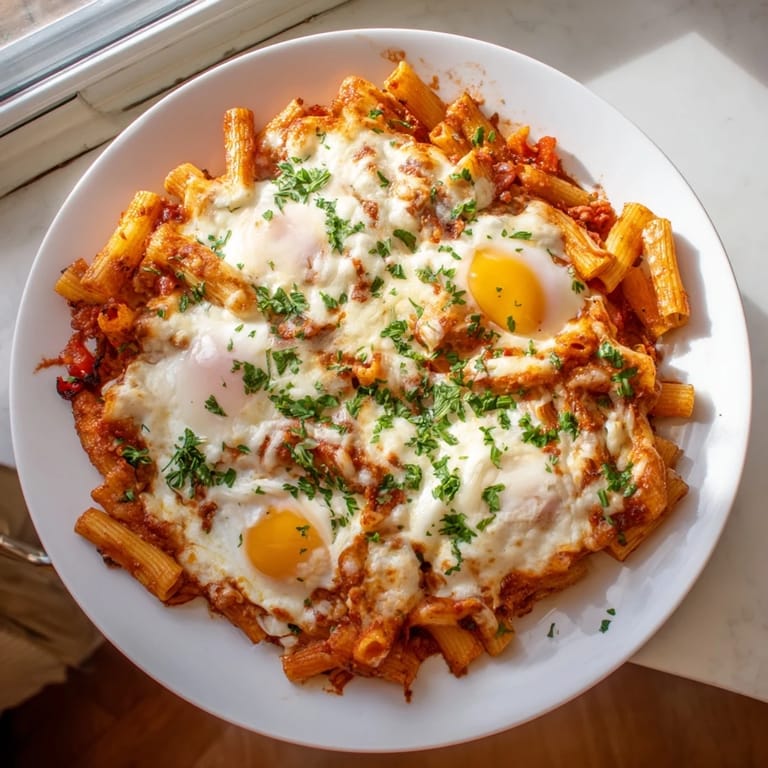
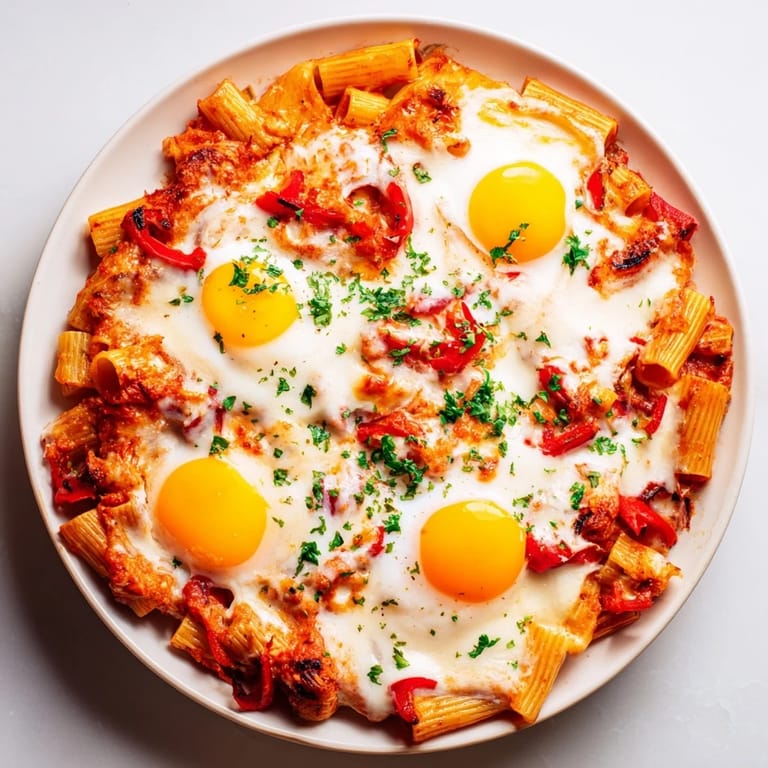
- Carefully crack an egg into each well, sprinkle with any remaining cheese, and transfer to your preheated oven. You'll know it's done when the egg whites have set but the yolks still jiggle slightly when you gently shake the pan, about 15–18 minutes.
- Finish and serve:
- Remove from the oven, scatter fresh herbs over the top, and bring it straight to the table while everything is still steaming. This is food that demands to be eaten immediately.
 Save to Pinterest
 I realized this dish had become something special when my sister asked for the recipe before she'd even finished eating. It wasn't the technique she was after—it was the way the spices and the eggs and the pasta all seemed to understand each other, like they'd been meant to be together all along.
The Magic of Spice Layering
The reason this dish tastes so much more interesting than a basic pasta bake comes down to respecting each spice's job. The cumin grounds you in warmth, the paprika whispers smoke, the coriander adds a subtle brightness, and the cayenne (if you use it) just reminds your palate that it's awake. They're not fighting each other—they're creating a landscape. I learned this by accident one night when I doubled the paprika and the dish tasted like a fire in a good way but also a strange way, and after that I started thinking of spices as voices in a conversation rather than just things that go in the pot.
Why the Eggs Make Everything Better
There's a reason shakshuka has been feeding people for centuries—it's not just the taste, but the experience of breaking that yolk and watching it turn the entire dish creamy and rich. In this pasta version, the yolk does the same transformative work, but now it's also lubricating the pasta and the sauce together into something you could never achieve if you just stirred it all in a pot. The heat from the pasta cooks the egg white until it's set but leaves the yolk soft enough to become sauce, which is honestly one of the best kitchen tricks I've picked up.
Cheese: The Quiet Player
Cheese in this dish is optional, but it's also optional in the way that salt is optional—technically yes, but you'll miss it when it's gone. Feta crumbles add a salty tang that feels very Middle Eastern and prevents the whole thing from becoming too rich and heavy. Mozzarella melts into everything and makes it smoother, more comforting. I've found that using a combination of both—maybe 60 grams feta and 40 grams mozzarella—gives you the best of both worlds, though half the dish benefits from the cheese blooming in the oven and half from the eggs doing their thing.
- If you can't find good feta, aged cheddar adds sharpness that works just as well in a different direction.
- Add cheese to the sauce layer before baking and let it melt into the heat, then sprinkle a tiny bit more around the eggs for texture.
- Don't skip the cheese entirely unless you have a reason—it genuinely makes a difference in how the whole dish tastes.
 Save to Pinterest
 This dish reminds me why I cook in the first place—it's not about impressing people with technique, but about creating a moment where everyone at the table is happy and full and asking for more. That feels like enough.
Recipe FAQs
- → What type of pasta works best for this dish?
Short pasta such as penne, rigatoni, or fusilli is ideal, as it holds the sauce well and bakes evenly.
- → Can I add vegetables to the sauce?
Yes, sautéed onions and bell peppers are part of the base, and adding spinach or kale adds extra richness.
- → How do I achieve runny egg yolks when baking?
Bake until egg whites are set but yolks remain slightly soft, usually 15–18 minutes at 200°C (400°F).
- → Which cheeses complement this baked pasta?
Mozzarella adds meltiness, while feta imparts tanginess. You can use one or a combination depending on taste.
- → Is there a way to make this dish without dairy or eggs?
Omit eggs and cheese, then add protein-rich chickpeas to keep it hearty and balanced.