 Save to Pinterest
 There's something about the smell of fresh mint and lemon that instantly transports me to a sunny afternoon at a neighborhood farmer's market, where I first watched someone make tabbouleh with such ease and confidence. What struck me wasn't the complexity—it was how alive everything tasted, how each herb seemed to vibrate against the grain. That day, I bought way too many tomatoes and a bunch of parsley that was practically glowing, convinced I'd finally understand what made Middle Eastern food feel so effortlessly bright.
I made this for a potluck once and watched people go back for thirds, which rarely happens with salads. Someone asked if there was a secret ingredient, and honestly, it's just using the best produce you can find and not being shy with the herbs—the parsley isn't a garnish here, it's practically the main event.
Ingredients
- Fine bulgur wheat: Use fine grade, not medium or coarse, because it hydrates quickly and stays tender without turning mushy.
- Ripe tomatoes: Cherry or heirloom varieties work beautifully; the ripeness matters more than the type.
- Fresh flat-leaf parsley: This is the hero of the dish—don't skimp or substitute with curly parsley, which has a different texture and taste.
- Fresh mint: Adds a cool note that balances the lemon and makes everything feel alive.
- Extra virgin olive oil: A good quality oil makes a noticeable difference in the final taste.
- Lemon juice: Freshly squeezed is worth the effort; bottled just doesn't have the same brightness.
- Scallions: They add a gentle sharpness without overpowering the other herbs.
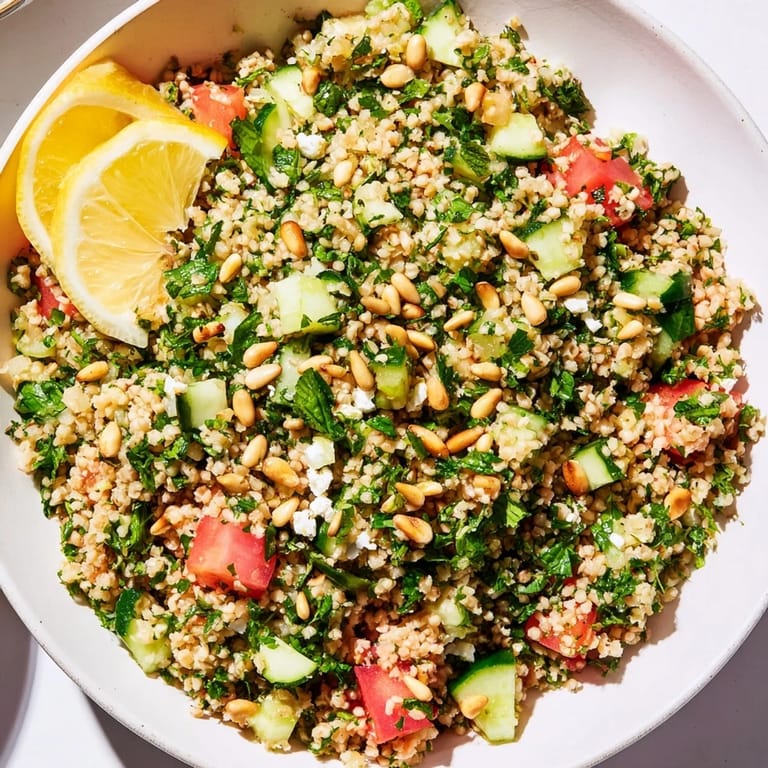
- Optional feta and pine nuts: The feta brings creaminess and salt, while pine nuts add a subtle richness.
Tired of Takeout? 🥡
Get 10 meals you can make faster than delivery arrives. Seriously.
One email. No spam. Unsubscribe anytime.
Instructions
- Hydrate the grain:
- Pour boiling water over the bulgur and salt, cover it, and let it sit undisturbed for about 10 minutes. You'll see the grains soak up all the water and become tender—it's almost magical how quickly it happens.
- Cool and fluff:
- Once the water is absorbed, fluff the bulgur with a fork to separate the grains, then let it cool to room temperature so the fresh herbs don't wilt when you mix everything together.
- Make the dressing:
- Whisk together the olive oil, lemon juice, minced garlic, and black pepper in a small bowl until it emulsifies slightly. Taste it straight—this is your flavor base.
- Combine everything:
- Add the tomatoes, cucumber, parsley, mint, and scallions to the cooled bulgur and gently toss everything together, being careful not to crush the vegetables.
- Dress and marry the flavors:
- Pour the dressing over the grain mixture and toss thoroughly until every grain is coated. If you have time, chill it for 10 minutes so the flavors deepen and meld together.
- Finish and serve:
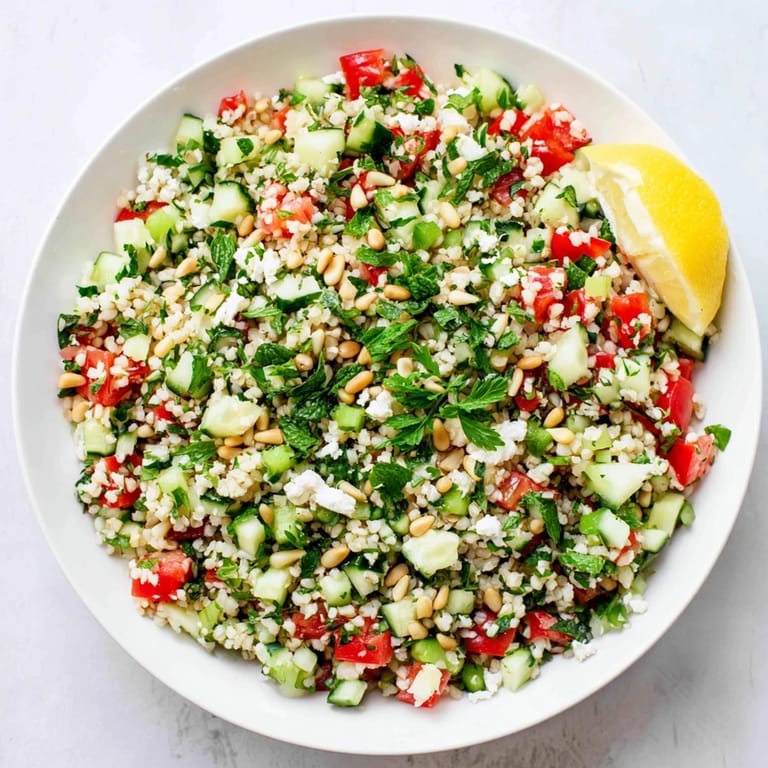
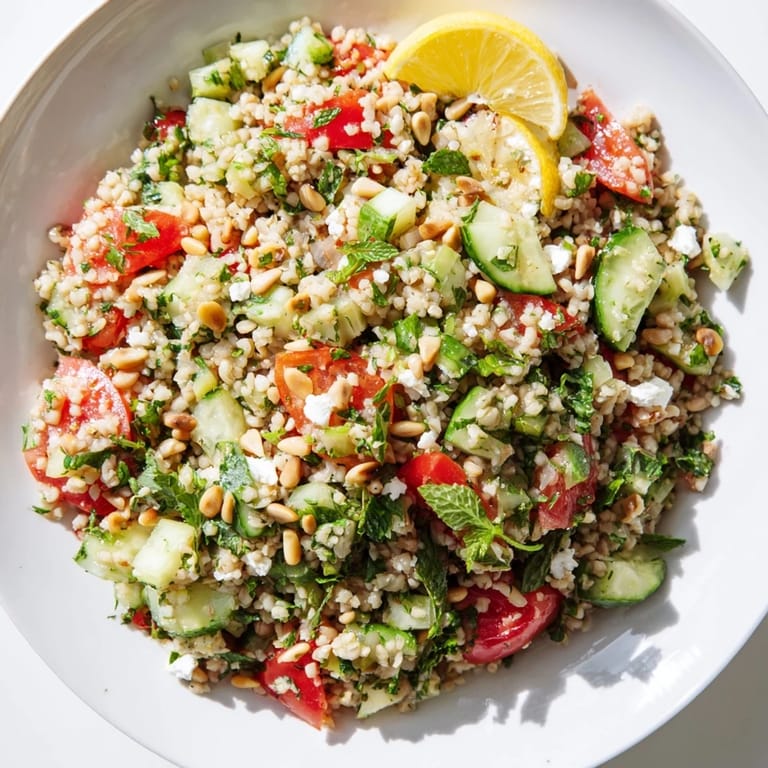
- Taste and adjust the salt or lemon juice if needed, then serve in bowls topped with feta, pine nuts, and a lemon wedge on the side.
 Save to Pinterest
 This dish sits at that beautiful intersection of simple and special—it looks impressive on a table, tastes like you've been cooking all day, but takes barely half an hour from start to finish. That's when I knew I'd be making it again and again.
The Beauty of Fresh Herbs
The magic of tabbouleh lives entirely in the herbs. Unlike cooked dishes where herbs become whispers in the background, here they're loud and proud, so the quality and freshness matter enormously. I learned this lesson the hard way by buying limp parsley from a grocery store and wondering why my version tasted flat and green rather than bright and alive. Now I buy directly from farmers' markets or choose bundles that smell vibrant when I crush a leaf between my fingers.
Make-Ahead and Storage Wisdom
Tabbouleh actually improves after a few hours in the fridge as the flavors mingle and the grain continues to absorb the dressing. I often make it the morning of a gathering, which takes the stress out of last-minute prep. Just keep the feta and pine nuts separate until serving so they don't get soggy, and you can store everything for up to two days, though I find it tastes best within 24 hours.
Variations That Work
While traditional tabbouleh sticks with bulgur, I've played with quinoa for a gluten-free version and it's equally delicious, just with a slightly different texture. Adding chickpeas or grilled chicken transforms it from a vibrant side into a proper meal, and I've even stirred in shredded beets for color and earthiness. The base is forgiving as long as you keep the fresh herb ratio high and the dressing bright.
- Swap in cooked farro or barley for a chewier grain if you want more texture.
- A handful of pomegranate seeds adds sweetness and visual pop.
- Serve with warm pita bread on the side for scooping and carrying the bowl's brightness into every bite.
 Save to Pinterest
 This bowl has become my go-to when I want something that feels like celebration but requires almost no effort. It's the kind of dish that reminds me why cooking is worth doing.
Recipe FAQs
- → What grain is traditionally used in this dish?
Fine bulgur wheat forms the base, providing a light, nutty texture that soaks up the dressing well.
- → Can I make a gluten-free version?
Yes, substituting cooked quinoa instead of bulgur wheat offers a gluten-free alternative without compromising flavor.
- → How is the lemon dressing prepared?
The dressing combines extra virgin olive oil, freshly squeezed lemon juice, minced garlic, and ground black pepper whisked until blended.
- → What herbs are included in this dish?
Fresh flat-leaf parsley and mint give a bright, aromatic depth, balancing the grain and vegetables.
- → Are there optional toppings to enhance the dish?
Crumbled feta cheese and toasted pine nuts can be added for creaminess and crunch, with lemon wedges served alongside for extra zest.