 Save to Pinterest
 The kitchen smelled like Sunday even though it was Thursday. My neighbor Maria had just walked me through her lasagna process, no measurements, just handfuls and gut feelings, and I stood there trying to memorize every move. She layered everything with such ease, talking the whole time about her mother's kitchen in Bologna, and I realized I'd been overthinking pasta my entire life. That night, I made my first lasagna alone, and it wasn't perfect, but it tasted like I'd finally cracked some kind of code.
I brought this to a potluck once, still warm in the dish wrapped in towels, and watched it disappear in under twenty minutes. People kept coming back with forks, scraping at the corners where the cheese had crisped against the pan. One friend asked if I'd trained in Italy, which made me laugh because I'd only just learned to brown meat properly a few months before. That's when I knew this recipe had become something I could actually be proud of.
Ingredients
- Lasagna noodles: Uncooked noodles work beautifully here and save you from boiling water and juggling slippery sheets, just make sure your sauce has enough moisture to soften them as they bake.
- Ricotta cheese: The creamy heart of the lasagna, and mixing it with an egg keeps it from turning grainy or separating under the heat.
- Mozzarella cheese: Go for the shredded kind that melts into those glorious stretchy strings, and save a little extra for the top so it gets golden and bubbly.
- Parmesan cheese: Freshly grated adds a sharp, nutty finish that balances all the richness underneath.
- Ground beef: Lean beef keeps the sauce from turning greasy, but don't go too lean or you'll lose some of that deep savory flavor.
- Italian sausage: This is where the magic happens, sweet or spicy both work, and removing the casing lets it crumble right into the sauce.
- Marinara sauce: Homemade is lovely, but a good jarred sauce works just fine and saves you half an hour on a weeknight.
- Garlic: Freshly minced garlic bloomed in olive oil creates the aromatic base that makes your whole kitchen smell like an Italian grandmother's house.
- Olive oil: Just enough to coat the pan and coax out the garlic without burning it.
- Fresh basil: Chopped and stirred into the sauce, it brightens everything and tastes like summer even in the middle of winter.
- Salt and black pepper: Simple seasonings that let the meat and cheese shine without fighting for attention.
Tired of Takeout? 🥡
Get 10 meals you can make faster than delivery arrives. Seriously.
One email. No spam. Unsubscribe anytime.
Instructions
- Preheat and prep:
- Set your oven to 375°F so it's ready when you are. This gives you time to build your layers without rushing.
- Bloom the garlic:
- Heat olive oil in a large skillet over medium heat, add the minced garlic, and let it sizzle just until it smells incredible, about a minute. Don't let it brown or it'll turn bitter.
- Brown the meat:
- Add the ground beef and sausage, breaking it up with a wooden spoon as it cooks until no pink remains, about 8 to 10 minutes. Drain off the excess fat so your sauce doesn't get oily.
- Simmer the sauce:
- Stir in the marinara, salt, pepper, and fresh basil, then let it bubble gently for 10 minutes. This is when all the flavors start talking to each other.
- Mix the ricotta:
- In a separate bowl, combine the ricotta and egg until smooth and creamy. The egg acts like glue, holding everything together as it bakes.
- Start the layers:
- Spread a thin layer of meat sauce across the bottom of a 9x13 inch baking dish to prevent sticking. Lay down 4 uncooked lasagna noodles, overlapping them slightly.
- Build the first layer:
- Spread half the ricotta mixture over the noodles, sprinkle a third of the mozzarella on top, then ladle more meat sauce over everything. Press gently so the noodles make contact with the moisture.
- Repeat the magic:
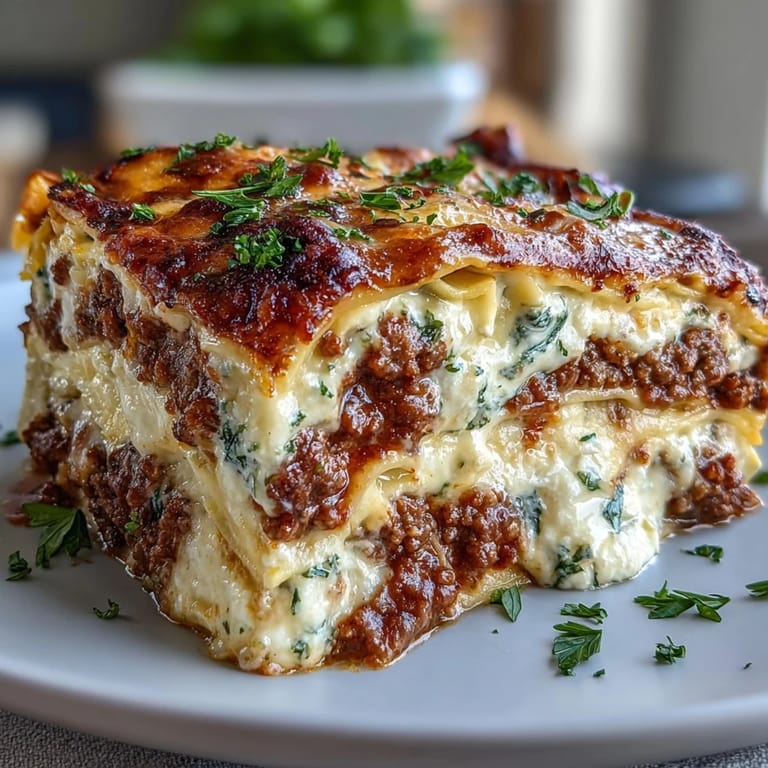
- Add another layer of noodles, the remaining ricotta, another third of mozzarella, and more sauce. You're creating a delicious, structured tower of comfort.
- Finish strong:
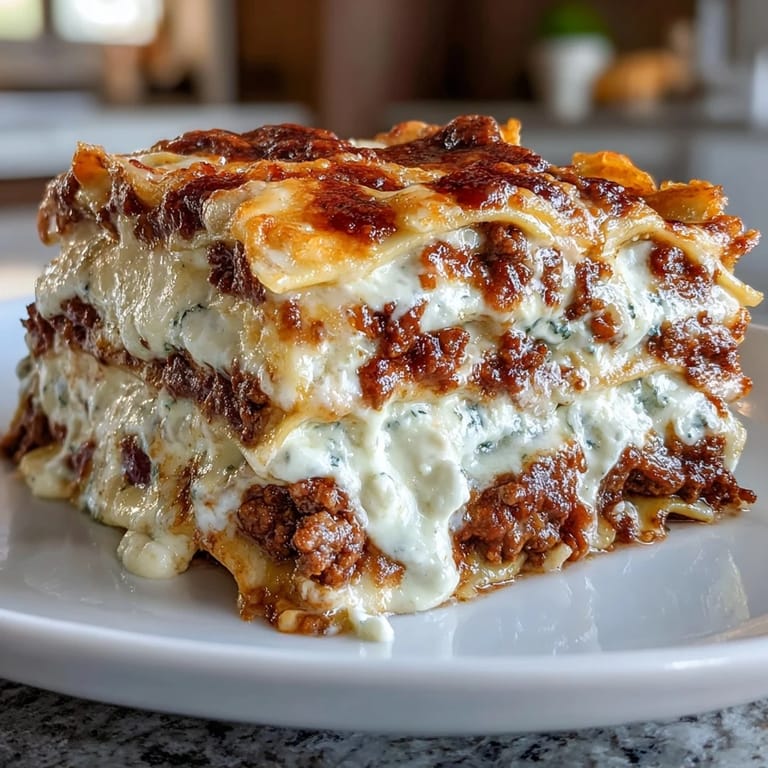
- Top with the last layer of noodles, pour the remaining meat sauce over them, then shower the whole thing with mozzarella and Parmesan. This top layer will turn golden and irresistible.
- Covered bake:
- Cover the dish tightly with foil and slide it into the oven for 25 minutes. The foil traps steam, which softens the noodles perfectly.
- Uncovered finish:
- Remove the foil and bake for another 15 minutes until the cheese on top is bubbling and starting to brown in spots. The smell alone will make you impatient.
- Rest before serving:
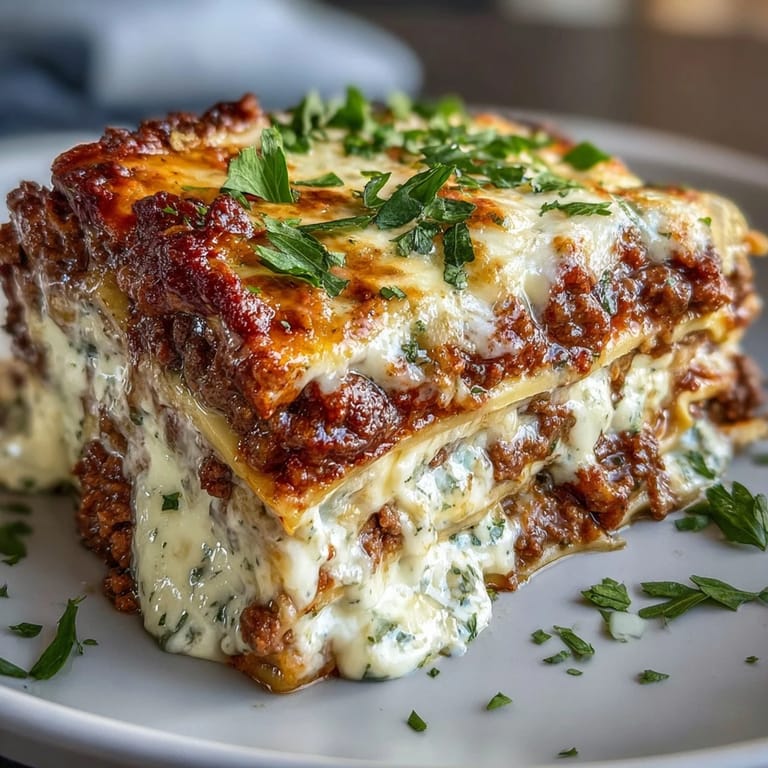
- Let the lasagna sit for at least 15 minutes after you pull it from the oven. This resting time lets everything set so your slices hold their shape instead of sliding apart.
 Save to Pinterest
 One winter night, I made this for my brother after he'd had a rough week, and he sat at my kitchen table scraping his plate clean without saying much. When he finally looked up, he just nodded and said, that's the one, and I knew he didn't just mean the lasagna. Sometimes a meal is just a way to say things you don't have words for.
Making It Your Own
You can tuck sautéed spinach or mushrooms between the ricotta layers for extra depth and a little earthiness. I started doing this after a friend brought a vegetable-loaded version to a dinner party, and now I almost prefer it that way. If you want it lighter, swap in part-skim cheeses, or go the other direction with whole milk ricotta for something unbelievably rich. Fresh herbs like oregano or thyme in the sauce can shift the whole flavor profile in a beautiful direction.
Storing and Reheating
Lasagna lives happily in the fridge for up to four days, covered tightly, and it reheats like a dream in the oven or microwave. I usually cut it into portions and freeze individual slices wrapped in foil, then tucked into freezer bags, so I can pull one out on a night when cooking feels impossible. It holds up for about two months frozen, and when you reheat it, it tastes just as good as the day you made it, sometimes better.
Pairing and Serving
This lasagna wants a simple green salad on the side, something crisp and lightly dressed to cut through all that richness. A crusty loaf of bread for mopping up sauce never hurt anyone either. If you're feeling fancy, pour a glass of Chianti or another robust Italian red, the tannins play perfectly with the tomato and meat.
- Let guests serve themselves straight from the baking dish for a relaxed, family style feel.
- Garnish with extra fresh basil or a sprinkle of Parmesan right before serving.
- If you're making this ahead, assemble it completely, cover it, and refrigerate it for up to 24 hours before baking.
 Save to Pinterest
 This lasagna has become my go to for nights when I want to feel like I've really fed someone, not just put food on a plate. It's the kind of dish that makes people linger at the table, and that's worth every minute you spend layering it together.
Recipe FAQs
- → Why should I let the lasagna rest before serving?
Resting allows the layers to set and firm up slightly, making it much easier to cut clean slices. If you slice it immediately, the cheese and fillings may slide apart. The 15-minute resting period also allows the flavors to meld together and the internal temperature to stabilize.
- → Can I make this ahead of time?
Absolutely. You can assemble the entire dish up to 24 hours in advance, cover tightly, and refrigerate. When ready to bake, you may need to add 5-10 minutes to the covered baking time since it will be cold. You can also freeze unbaked lasagna for up to 2 months.
- → Do I need to cook the lasagna noodles first?
No, this method uses uncooked noodles directly in the dish. The moisture from the meat sauce and cheese cooks the pasta perfectly during baking. Just be sure your sauce has enough liquid and that the dish is covered tightly so the noodles can steam properly.
- → Can I substitute the meats?
You can use all ground beef, all Italian sausage, or even ground turkey or chicken. For a vegetarian version, substitute with plant-based crumbles or increase the vegetables like mushrooms and spinach. Just maintain roughly 2 pounds of protein or substitute to keep the layers substantial.
- → How do I know when it's done baking?
The lasagna is done when the cheese on top is golden brown and bubbly, and you can see the sauce actively bubbling around the edges. An instant thermometer inserted into the center should read at least 160°F (71°C). If the cheese is browning too quickly, tent loosely with foil.
- → What sides pair well with lasagna?
A simple green salad with vinaigrette helps balance the richness. Garlic bread or focaccia is perfect for soaking up extra sauce. Roasted vegetables like broccoli or asparagus work well, and a light antipasto with olives and marinated vegetables makes a nice starter.