 Save to Pinterest
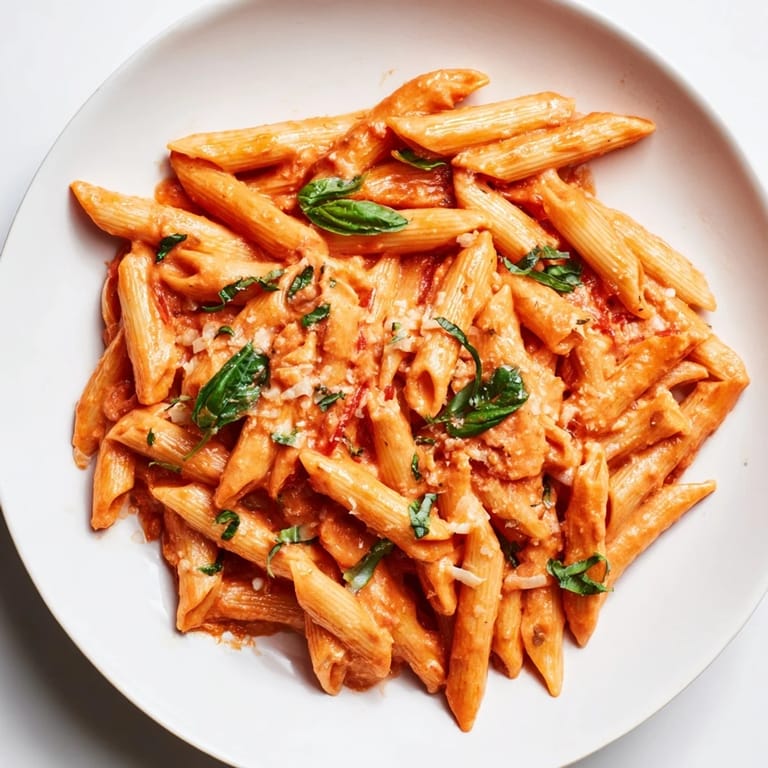
 There's something almost magical about watching a single pot transform into dinner—the moment when cream swirls into tomato and the whole kitchen smells like garlic and basil all at once. I discovered this pasta on a weeknight when I was too tired to fuss with multiple pans, and what started as a shortcut became my most-requested dish. The beauty of it is that everything happens in one place, and by the time the pasta finishes cooking, the sauce has built itself into something rich and deeply satisfying.
I made this for friends who showed up unannounced on a rainy evening, and I watched their faces light up when I served it straight from the pot with extra Parmesan scattered on top. There's something about sharing food cooked this simply—no fuss, no pretense—that makes people relax. They asked for the recipe before they'd finished eating, and I knew I'd found something special.
Ingredients
- Penne or fusilli pasta, 350 g: The ridges and curves catch the sauce, so avoid thin spaghetti here—you want something sturdy that drinks in the creamy tomato.
- Olive oil, 2 tbsp: Good quality matters since it's one of the first flavors you'll taste; it builds the foundation for everything else.
- Yellow onion, 1 medium, finely chopped: Chopping it small means it dissolves into the sauce and sweetens everything without announcing itself.
- Garlic, 4 cloves, minced: The fresher the better—garlic is your quiet workhorse here, adding depth that makes people wonder what the secret is.
- Red pepper flakes, 1/2 tsp: Optional, but they add a whisper of heat that makes the tomato taste more vivid without overpowering.
- Canned crushed tomatoes, 800 g: Winter or summer, canned tomatoes are reliable; they've already been cooked down and concentrated, saving you time.
- Tomato paste, 2 tbsp: This is your flavor amplifier—it deepens the tomato taste and adds a slight sweetness that balances acidity.
- Sugar, 1 tsp: A small amount mellows the acidity in canned tomatoes so the sauce tastes round and complete rather than sharp.
- Salt and black pepper: Build your seasoning as you go; you'll taste it better at the end when everything's combined.
- Heavy cream, 200 ml: This is what transforms the sauce into something silky—add it near the end so it doesn't reduce down too much.
- Parmesan cheese, 60 g, freshly grated: Grate it yourself if you can; it melts more smoothly and tastes less dusty than pre-grated.
- Fresh basil, 1 cup, chopped: Save this for the very end—heat destroys the bright flavor, so you're almost folding in fresh green color and aroma at the last moment.
- Water or vegetable broth, 600 ml: Broth adds a subtle depth if you have it, but water works perfectly fine and lets the tomato shine.
Tired of Takeout? 🥡
Get 10 meals you can make faster than delivery arrives. Seriously.
One email. No spam. Unsubscribe anytime.
Instructions
- Heat and soften:
- Warm the olive oil in your largest, deepest skillet over medium heat, then add the chopped onion. Let it cook undisturbed for a minute so it starts to caramelize, then stir occasionally for another 2–3 minutes until it's soft and golden at the edges. You'll smell the sweetness coming out of it.
- Build the aromatics:
- Stir in the minced garlic and red pepper flakes, cooking for just about a minute until your kitchen smells incredible. Don't let the garlic brown—you want it fragrant and soft, not bitter.
- Layer in the tomato:
- Add the crushed tomatoes, tomato paste, sugar, salt, and black pepper all at once. Stir it well so the tomato paste dissolves evenly and everything's combined. Taste here if you're curious; it'll taste acidic and bright, which is exactly right.
- Add pasta and liquid:
- Pour in the pasta and water, stirring so the pasta breaks up and gets submerged. It should look wet and soupy, almost like a loose risotto before you finish cooking. Bring it to a boil over medium-high heat, which takes about 2–3 minutes.
- Simmer gently:
- Once it's boiling, reduce the heat to medium-low, cover the pot, and let it bubble quietly for 12–14 minutes, stirring every few minutes so the pasta doesn't stick to the bottom. The pasta will cook directly in the sauce, soaking up tomato flavor as it softens, and the liquid will gradually absorb.
- Finish with cream:
- When the pasta is tender and most of the liquid has been absorbed, stir in the heavy cream and grated Parmesan. Leave the pot uncovered and cook for 2–3 minutes more, stirring gently, until the sauce turns pale, silky, and clings to every piece of pasta.
- Add basil and adjust:
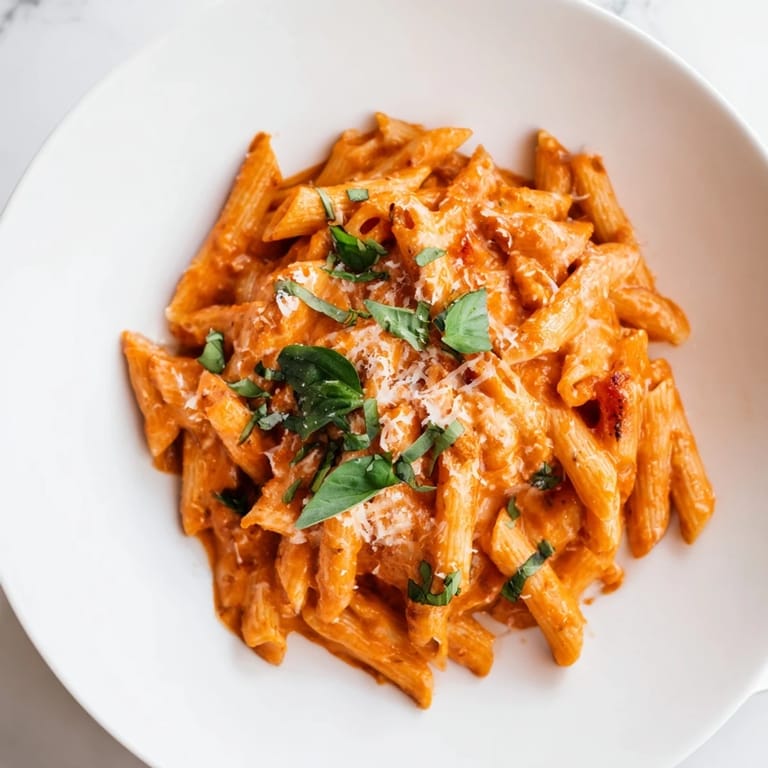
- Remove from heat and fold in the chopped basil gently so it doesn't bruise. Taste and adjust the salt and pepper—remember that Parmesan adds saltiness, so go slow. Serve immediately while it's hot.
 Save to Pinterest
 The first time someone came back for seconds and said they'd never made pasta this way before, I realized that simple doesn't mean boring—it means intentional. Every ingredient has a reason to be there, and nothing gets lost in complexity.
Why Single-Pot Cooking Changes Everything
Cooking pasta directly in sauce instead of straining it separately means the pasta absorbs tomato flavor as it cooks, becoming part of the dish rather than a neutral base. The starch released from the pasta also helps thicken and bind the sauce naturally, so you don't need extra cream or cornstarch. It's an old trick that sounds simple until you taste the difference—the pasta tastes seasoned all the way through, not just coated on the outside.
Timing and Temperature Matter
Medium-low heat is your friend here because it lets everything simmer gently without the sauce breaking or the cream curdling. If your stove runs hot, you might finish sooner than 12 minutes; if it runs cool, it might take a minute or two longer. The key is watching the pasta and the liquid level together—when the pasta is tender and there's just enough sauce clinging to it without pooling at the bottom, you're done.
Variations and Personal Touches
This recipe is a canvas, not a rule. I've stirred in sautéed mushrooms, wilted spinach, roasted zucchini, and even torn mozzarella with incredible results. Sometimes a pinch of nutmeg in the cream adds an almost invisible warmth that makes people pause and ask what that is. For a lighter version, use half-and-half instead of heavy cream, or a splash of pasta water in place of some of the cream to keep the sauce silky without the heaviness.
- Vegan version: coconut cream or cashew cream swapped for heavy cream, and nutritional yeast instead of Parmesan, tastes just as rich.
- Spice level: increase the red pepper flakes if you like heat, or use a pinch of crushed fennel for a subtle Italian sausage flavor without the meat.
- Herb swap: fresh oregano, thyme, or even a tiny bit of tarragon can replace or complement the basil depending on your mood.
 Save to Pinterest
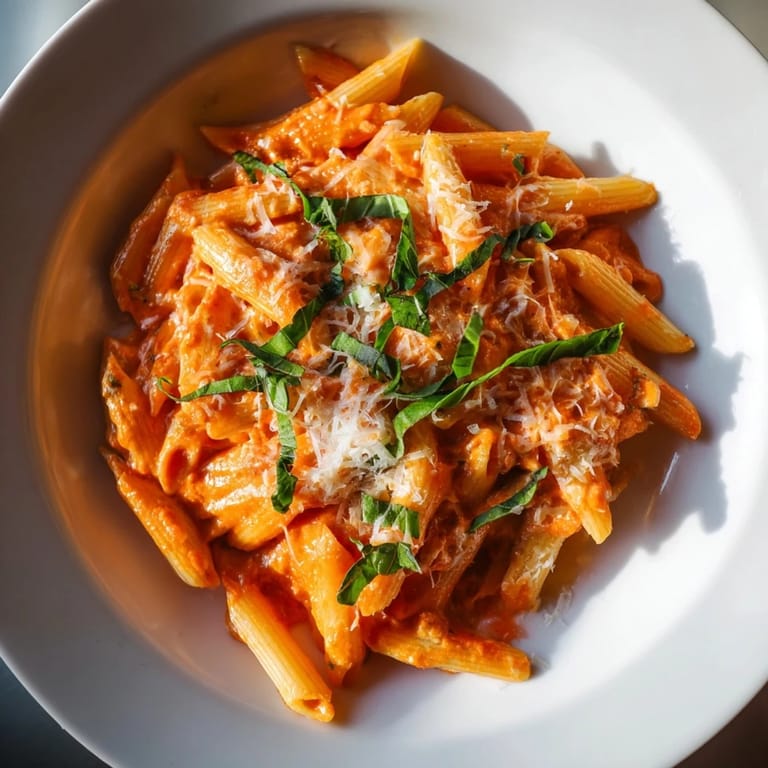
 This pasta teaches you that the best meals don't need to be complicated; they just need to be made with attention and care. That's the real magic hiding in a single pot.
Recipe FAQs
- → Can I use a different type of pasta?
Yes, penne or fusilli work best for holding the sauce, but any short pasta like rigatoni or rotini will also blend nicely.
- → How can I make this dish vegan?
Substitute heavy cream with plant-based alternatives and replace Parmesan with vegan cheese or nutritional yeast.
- → What can I add for extra vegetables?
Sautéed mushrooms, spinach, or roasted vegetables can be stirred in to boost nutrition and flavor.
- → Is it necessary to cover the pot during cooking?
Covering helps the pasta cook evenly and absorb the sauce, resulting in creamy consistency and tender texture.
- → Can I prepare this dish ahead of time?
It’s best served fresh, but leftovers can be stored in the refrigerator and gently reheated, adding a splash of water to loosen the sauce.