 Save to Pinterest
 The kitchen was warm, the oven ticking as it heated, and I stood there holding a slab of beef like it was made of gold. My hands were shaking a little—not from fear, but from the weight of expectation. Beef Wellington had always seemed like something other people made, the kind of dish that lived in fancy restaurants or old cookbooks with cracked spines. But there I was, about to wrap meat in mushrooms and pastry like I knew what I was doing. The smell of butter hitting the pan was the first sign that maybe, just maybe, I could pull this off.
I made this for my parents' anniversary dinner, and I remember the silence when I brought it to the table. Not awkward silence—the kind where everyone stops talking because they're too busy staring. My dad, who never compliments food without adding a joke, just nodded and said it was restaurant-quality. My mom asked if I'd secretly taken a cooking class. I hadn't, but I had watched about six videos and read the recipe four times, which felt like the same thing.
Ingredients
- Beef tenderloin: This is the star, so buy the best you can afford and make sure it's trimmed of any silver skin or excess fat.
- Cremini mushrooms: Chop them as finely as you can—this isn't the time for chunky pieces, you want a paste that clings to the beef.
- Shallots and garlic: They add sweetness and depth to the duxelles without overpowering the mushrooms.
- Fresh thyme: A little goes a long way, and it makes the whole kitchen smell like a French bistro.
- Prosciutto: It creates a barrier that keeps the pastry from getting soggy and adds a salty, savory layer.
- Dijon mustard: Brushed on the beef, it adds a sharp contrast to the richness of everything else.
- Puff pastry: Use store-bought and don't feel guilty—it's flaky, buttery, and saves you hours of work.
- Egg: Beaten and brushed on the pastry, it gives you that glossy, golden finish.
Tired of Takeout? 🥡
Get 10 meals you can make faster than delivery arrives. Seriously.
One email. No spam. Unsubscribe anytime.
Instructions
- Sear the beef:
- Season it generously with salt and pepper, then sear it hard in a smoking-hot skillet until every side is browned. This locks in the juices and adds a caramelized crust that deepens the flavor.
- Make the duxelles:
- Cook the mushrooms, shallots, garlic, and thyme in butter until all the moisture is gone and the mixture looks like a thick, dark paste. If it's watery, the pastry will get soggy, so be patient.
- Layer the prosciutto:
- Lay the slices on plastic wrap in a slightly overlapping rectangle, then spread the cooled duxelles evenly on top. This is your protective layer, and it needs to cover everything.
- Wrap the beef:
- Brush the seared, cooled beef with Dijon mustard, then use the plastic wrap to roll the prosciutto and mushrooms tightly around it. Twist the ends like a candy wrapper and chill it so it holds its shape.
- Encase in pastry:
- Roll out the puff pastry on a floured surface, place the unwrapped beef in the center, and fold the pastry over like you're wrapping a present. Seal the edges well and place it seam-side down on a lined baking sheet.
- Brush and bake:
- Brush the whole thing with egg wash, chill it for 10 minutes to firm up, then bake until the pastry is golden and the beef reaches your desired internal temperature. Let it rest before slicing so the juices redistribute.
 Save to Pinterest
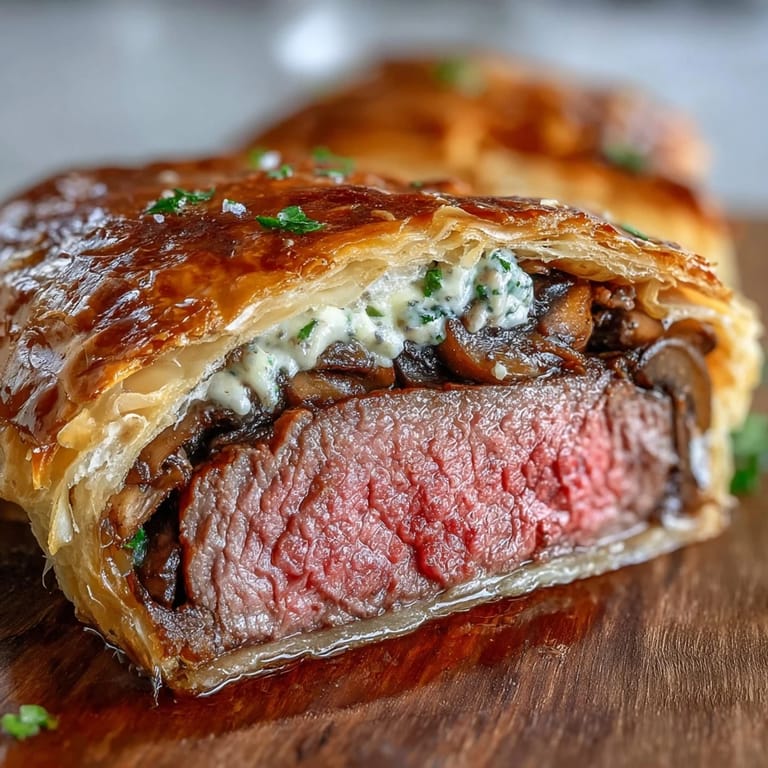
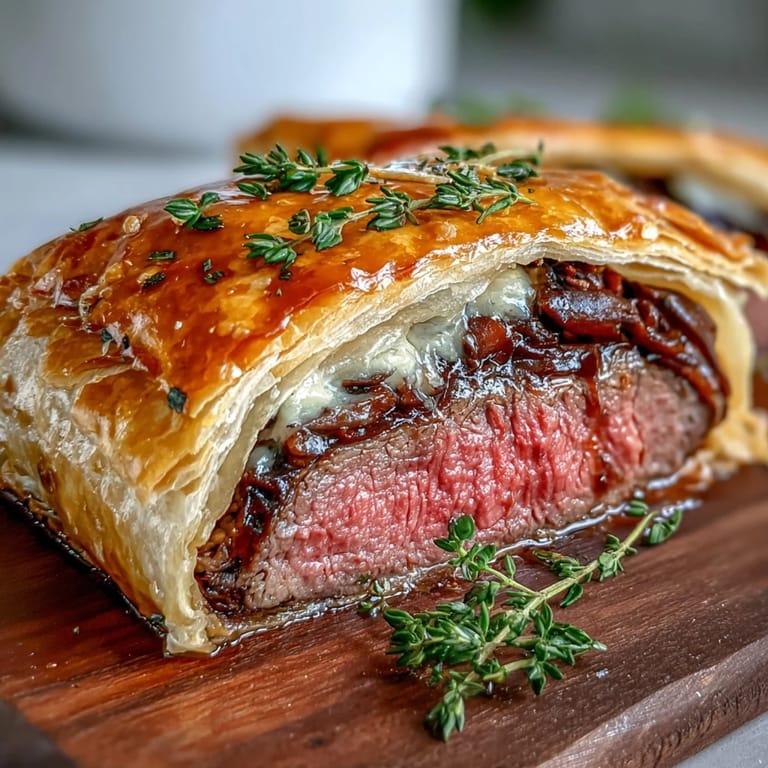
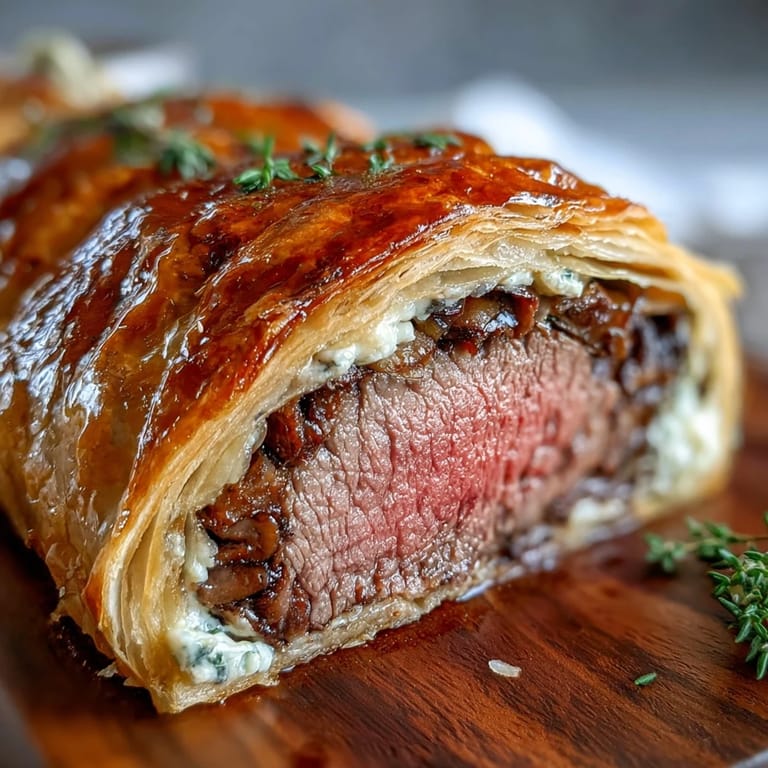
 The first time I sliced into a Wellington, I held my breath. I was terrified it would be raw in the middle or overcooked and dry. But the knife went through the crisp pastry, the prosciutto, the mushrooms, and then—pink, perfect beef. My friend across the table actually gasped. We ate in near silence, the kind where forks scrape plates and everyone's too busy tasting to talk. It wasn't just dinner, it was proof that I could do something I thought was out of reach.
Choosing Your Beef
Ask your butcher for a center-cut beef tenderloin and have them trim it for you if you're not confident with a knife. The more uniform the shape, the more evenly it will cook. I once used a piece that tapered too much on one end, and that side came out more done than I wanted. Now I tie it with kitchen twine before searing if it's uneven, just to give it a little help.
Getting the Pastry Right
Puff pastry is your friend, but only if you treat it right. Keep it cold until you're ready to use it, and don't overwork it when you roll it out. If it starts to feel warm and sticky, pop it back in the fridge for a few minutes. I learned this after watching my pastry shrink and tear in the oven because I rushed it. A little patience here makes all the difference.
Serving and Storing
Beef Wellington is best served fresh from the oven after a short rest, but leftovers can be wrapped tightly and refrigerated for up to two days. Reheat slices gently in a low oven to keep the pastry from getting soggy. If you want to prep ahead, you can assemble the whole thing, wrap it tightly in plastic, and refrigerate it for up to 24 hours before baking.
- Serve with a red wine reduction, horseradish cream, or a simple pan jus made from the beef drippings.
- Pair it with roasted vegetables or a light green salad to balance the richness.
- Let guests know it's coming—this dish deserves an entrance.
 Save to Pinterest
 Every time I make Beef Wellington now, I feel a little more confident, a little less like I'm faking it. It's become the dish I make when I want to impress someone or remind myself that I'm capable of more than I think.
Recipe FAQs
- → Can I prepare Beef Wellington ahead of time?
Yes, you can assemble it completely and refrigerate for up to 24 hours before baking. Just add 5-10 minutes to the cooking time if baking directly from cold.
- → What cut of beef is best for Wellington?
Beef tenderloin (also called filet mignon when cut into steaks) is ideal because it's tender, cooks evenly, and has a uniform shape that's easy to wrap.
- → How do I prevent a soggy bottom on the pastry?
Ensure the beef is completely cooled after searing, cook the mushroom duxelles until all moisture evaporates, and chill the wrapped beef before encasing in pastry.
- → What should I serve alongside Beef Wellington?
Classic pairings include roasted vegetables, green beans, mashed or dauphinoise potatoes, and a rich red wine sauce or jus for drizzling.
- → How do I know when it's cooked perfectly?
Use an instant-read thermometer inserted into the center: 120°F for rare, 130°F for medium-rare, or 140°F for medium. Let it rest before slicing to retain juices.
- → Can I substitute the mushrooms with something else?
While mushrooms are traditional for the duxelles, you could use finely chopped spinach mixed with shallots, or add chicken liver pâté for a more decadent version.