 Save to Pinterest
 There's something about the smell of ginger hitting hot sesame oil that signals my kitchen is about to get loud and alive. I discovered this stir-fry on a particularly gray January afternoon when my vegetable drawer was looking sparse but my jar of kimchi was practically begging to be used. What started as improvisation became my go-to weeknight salvation, especially when the weather turns cold and I want something vibrant that feels both nourishing and a little bit spicy.
I made this for my sister who'd just gone vegetarian and was worried she'd be bored with her meals. Watching her eyes light up when she tasted it, especially that punch of fermented tang at the end, made me realize comfort food doesn't need meat to feel substantial. She's made it three times since and has texted me twice asking if I had any secret technique I'd left out.
Ingredients
- Broccoli florets: Small florets cook faster and catch the sauce better than big chunks; aim for bite-sized pieces.
- Carrots: Bias-cut means they cook evenly and look intentional, not lazy.
- Parsnip: This is the secret sweetness that makes everything taste rooted and earthy without being heavy.
- Sweet potato: Thin matchsticks are crucial here so they soften but stay a little crisp at the edges.
- Green cabbage: Shredding it yourself gives you control over the size; too thin and it disappears, too thick and it stays raw.
- Red bell pepper: Added later so it keeps its crunch and bright color instead of turning soft.
- Fresh ginger: Grate it rather than mince it; the fibers release more flavor that way.
- Garlic: Mince it fine so it doesn't become little nuggets that feel overwhelming.
- Toasted sesame oil: This is non-negotiable and worth buying the good stuff; the toasted variety has ten times more personality than regular.
- Soy sauce or tamari: Tamari is your friend if gluten bothers you, and it's honestly just as delicious.
- Rice vinegar: The acidity brightens everything and keeps the dish from tasting one-note.
- Maple syrup or honey: Just a touch balances the salty and sour so nothing feels aggressive.
- Kimchi: The star player; chop it into manageable pieces so every bite has some, and save a spoonful of the brine to drizzle at the end if you're feeling brave.
- Green onions: Slice them on the bias for elegance, or chop them however; they're mostly there for brightness and a fresh onion snap.
- Toasted sesame seeds: These add texture and a subtle nuttiness that makes it feel finished.
Tired of Takeout? 🥡
Get 10 meals you can make faster than delivery arrives. Seriously.
One email. No spam. Unsubscribe anytime.
Instructions
- Mise en place like your life depends on it:
- Cut everything before the pan hits the heat because once things start moving, there's no time to chop. I learned this the hard way when I stood there frantically mincing garlic while my oil was smoking and my partner was standing there holding empty plates.
- Get the oil singing:
- Heat your sesame oil over medium-high heat until it shimmers and smells almost nutty, which takes maybe a minute. You'll know it's ready when you can almost see the heat waves rising off the surface.
- Wake up your aromatics:
- Add ginger and garlic, and stay right there at the stove for those 30 seconds because they go from fragrant to burnt faster than you'd think. The moment your nose registers that ginger-garlic smell, you're ready to move on.
- Start with the hardy vegetables:
- Add carrots, parsnip, sweet potato, and broccoli all at once and let them sizzle for 4 to 5 minutes, stirring occasionally so nothing sticks but also so everything gets a chance to develop color. You want them to start releasing their sweetness and getting a little caramelized on the edges.
- Bring in the quicker vegetables:
- Add cabbage and bell pepper and keep stirring for another 3 to 4 minutes until everything is what I call crisp-tender, which means it still has some resistance when you bite it but isn't raw anymore. The pan will sound different now, more alive and clattery.
- Mix and pour your sauce:
- Whisk soy sauce, rice vinegar, and maple syrup in a small bowl and pour it all over everything, then toss until the vegetables are evenly coated and glossy. The whole pan will smell like a good Asian restaurant at this point.
- The gentle kimchi moment:
- Remove from heat, add chopped kimchi, and fold it in gently with a wooden spoon so you're not breaking up the vegetables and the fermentation doesn't get shocked by too much heat. Think of it as tucking in something fragile rather than mixing a salad.
- Plate and garnish:
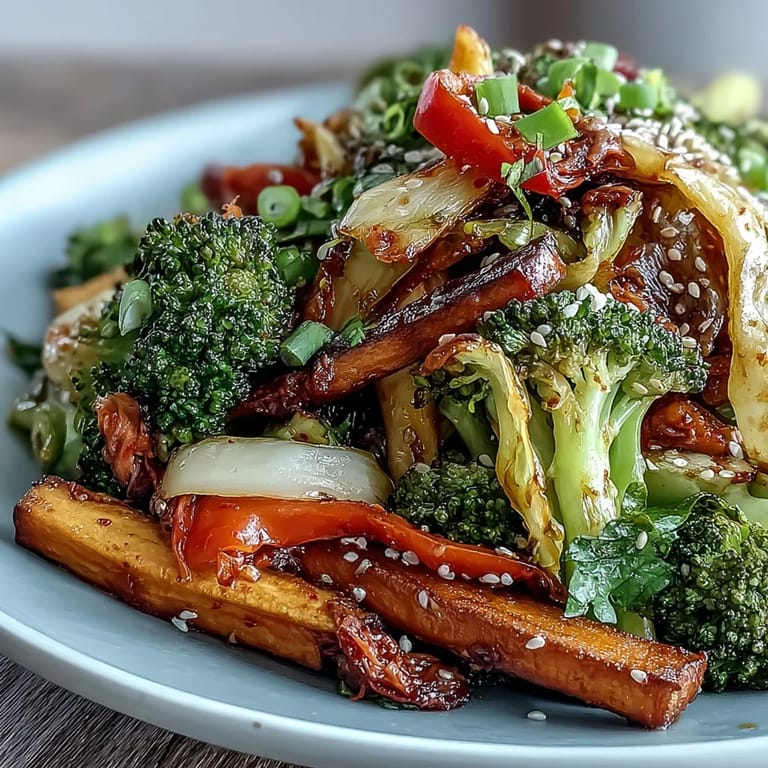
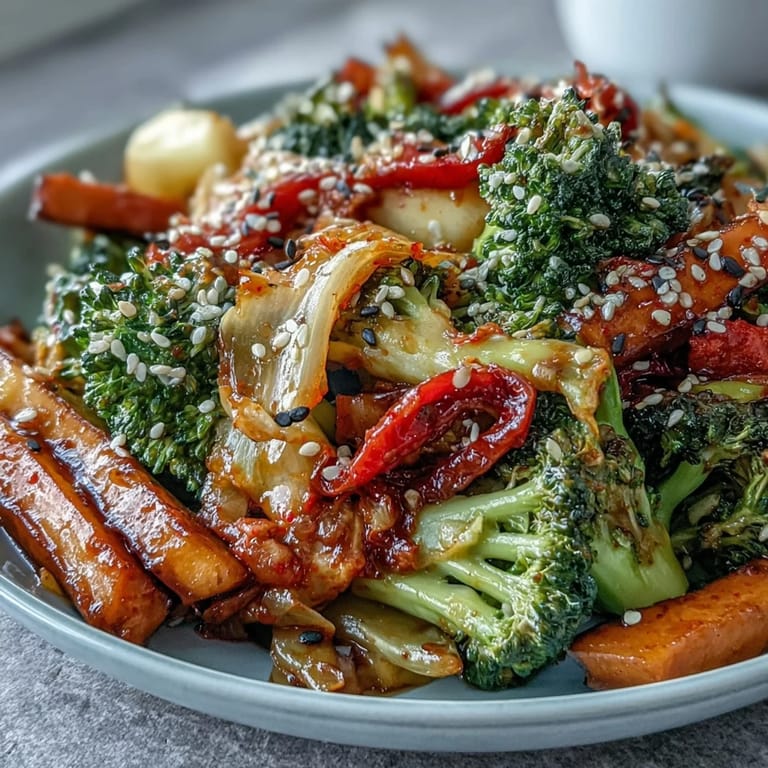
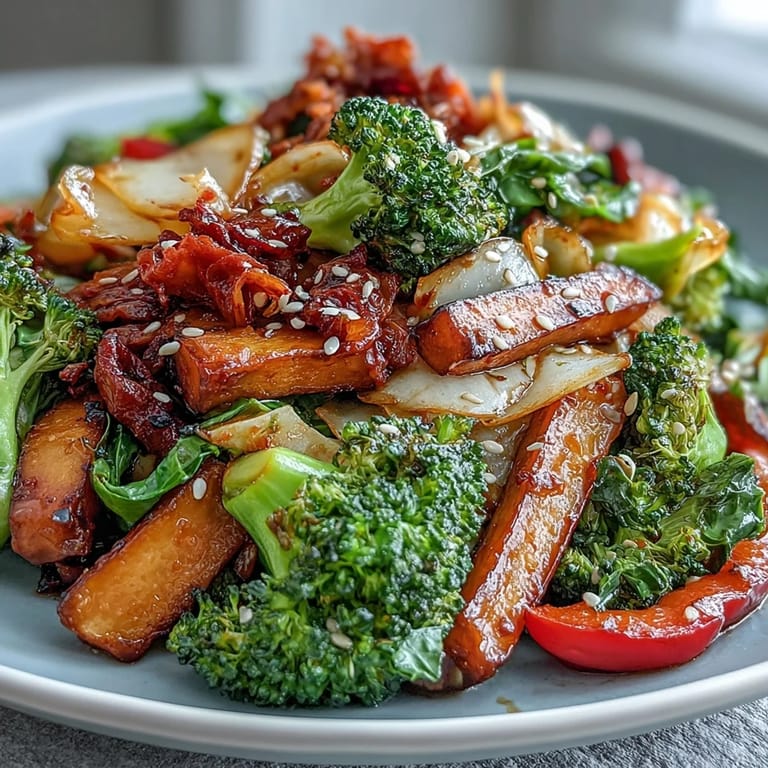
- Serve immediately while everything is still hot and steaming, then scatter green onions and sesame seeds on top so they stay crispy and catch the light. The whole thing should look colorful enough that your dinner photo turns out.
 Save to Pinterest
 The first time someone told me they could feel this dish sitting differently in their stomach than other meals, I understood why fermented foods have been around for thousands of years. It became the meal I cook when I want to feel like I'm actually taking care of myself instead of just getting fed.
Why This Works for Winter
Winter vegetables are underrated; they're sweeter and earthier than summer stuff because they've been through frost and have more time to develop flavor. This stir-fry lets that depth shine while the kimchi and sesame oil add enough personality that everything feels bright despite being cooked. The whole dish tastes like comfort but doesn't sit heavy, which is exactly what you want when it's cold outside and you're tired of feeling sluggish.
The Kimchi Strategy
Kimchi is temperamental about heat, which is why I treat it like a finishing touch rather than an ingredient. Some people love a lot of it; some people find it overwhelming. I started with a half cup and worked my way up, and now I know my threshold is three-quarters of a cup, which gives you that fermented tang without making the dish taste like pure spice and vinegar.
Serving Suggestions and Last Thoughts
Alone this is great, but serve it over rice or quinoa or soba noodles if you want something more substantial for dinner. The sauce soaks into grains beautifully and the whole meal becomes something you can eat with one hand while doing something else.
- Leftover stir-fry keeps for three days in the fridge and reheats better than you'd expect if you do it gently in a pan with a splash of water rather than the microwave.
- Make a double batch and eat it for lunch the next day when you're tired and don't want to think about food.
- Add any other winter vegetable you have lying around; turnips, rutabaga, kale, even cabbage in different colors work beautifully.
 Save to Pinterest
 This stir-fry became my proof that real food doesn't need to be complicated to be nourishing, and that probiotics don't need to taste like punishment. Make it, taste it, and then make it again.
Recipe FAQs
- → Can I use other fermented vegetables besides kimchi?
Yes, sauerkraut, pickled vegetables, or fermented carrots work well. Just adjust seasonings to maintain balance in the final dish.
- → Why is kimchi added at the end instead of cooked with the vegetables?
Adding kimchi at the end preserves its beneficial probiotics and enzymes, which can be destroyed by high heat. It also maintains the kimchi's crisp texture and vibrant flavor.
- → What can I serve with this stir-fry?
Steamed rice, quinoa, or soba noodles make excellent bases. The dish also pairs well with roasted tofu or a fried egg for added protein.
- → How long does this keep in the refrigerator?
Stored in an airtight container, the vegetables will keep for 3-4 days. The kimchi will continue to ferment slightly, developing more tanginess over time.
- → Can I make this gluten-free?
Simply substitute tamari or coconut aminos for the soy sauce. Always check your kimchi label, as some varieties contain gluten or fish sauce.