 Save to Pinterest
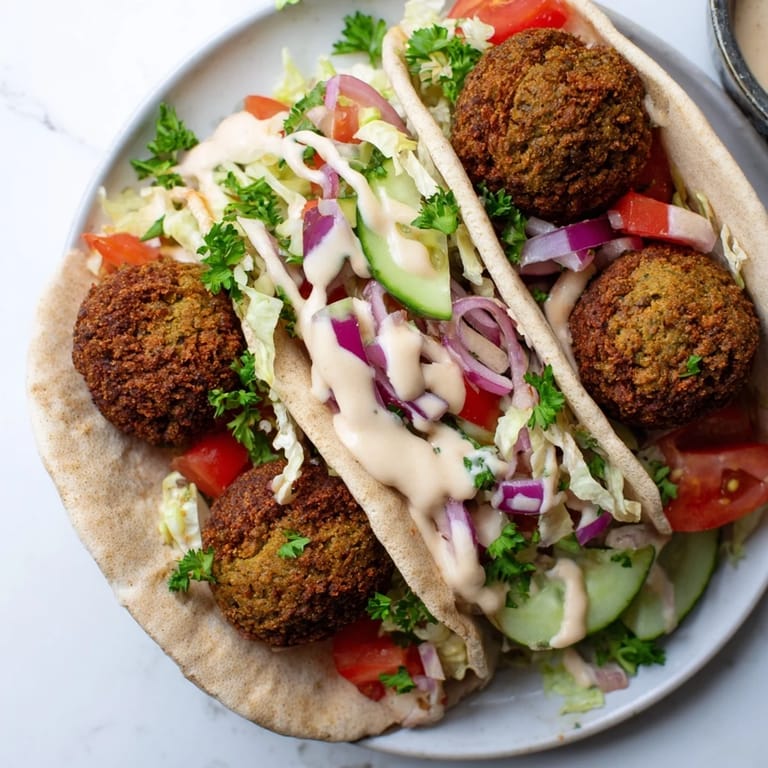
 There's something almost meditative about the ritual of frying falafel—watching those green-flecked patties turn golden in the oil, the kitchen filling with the warm, herbaceous aroma of cumin and coriander. Years ago, I discovered that the secret isn't in some exotic technique but in treating dried chickpeas with respect, soaking them overnight and refusing to overcomplicate the spice blend. That first batch I made, I was convinced something was missing until I bit into one and realized the fresh herbs were doing all the heavy lifting. Now, every time I make falafel pita pockets, I'm transported back to that moment of quiet discovery in my kitchen.
I remember bringing a batch of these to a potluck where someone had specifically requested "not another salad," and watching three different people come back for seconds was its own kind of validation. The pita pockets disappeared so fast I barely got one for myself, but honestly, that's when you know you've nailed something. It became the recipe I'd make whenever I wanted to feed people something that felt both comforting and a little bit special.
Ingredients
- Dried chickpeas (1 ½ cups, soaked overnight): Start with dried, not canned—they create that lighter, fluffier texture that makes all the difference between decent falafel and genuinely crave-worthy falafel.
- Fresh parsley and cilantro (½ cup each): These herbs are what make the falafel green and herbaceous; don't even think about skipping them or using dried versions.
- Ground cumin and coriander (1 tsp each): Toast these in a dry pan for thirty seconds before measuring if you want to deepen their flavor, though it's not absolutely necessary.
- Tahini (½ cup): Look for hulled tahini rather than unhulled—it creates a creamier sauce with a gentler, less bitter finish.
- Pita bread (4): Warm them just before assembly so they're still soft and pliable enough to tuck everything inside without tearing.
- Fresh vegetables (lettuce, tomatoes, cucumber, red onion): Cut everything roughly the same size so each bite has balanced texture and flavor.
Tired of Takeout? 🥡
Get 10 meals you can make faster than delivery arrives. Seriously.
One email. No spam. Unsubscribe anytime.
Instructions
- Soak and pulse the base:
- Drain your soaked chickpeas thoroughly and pat them dry—any excess moisture will make the mixture too wet to hold together. Pulse everything in the food processor until the mixture looks like coarse breadcrumbs with just enough moisture to hold together when you squeeze it.
- Chill and rest:
- Refrigerating the mixture for even just fifteen minutes makes forming the patties easier and keeps them from falling apart in the oil. Wet hands help tremendously here, or if you have one, a falafel scoop takes the guesswork out of sizing.
- Heat oil carefully:
- You want the oil at 350°F—hot enough that a tiny test piece sizzles immediately but not so hot that the outside burns before the inside cooks through. A deep skillet with at least two inches of oil is your friend here.
- Fry in batches:
- Don't crowd the pan; each falafel needs space to develop that golden, crispy exterior. Two to three minutes per side is usually the sweet spot, and they should sound hollow when you tap them with a spoon.
- Make the sauce smooth:
- Whisk tahini and lemon juice together first—they'll seize up and look broken before you add water, but keep whisking. Gradually add cold water a tablespoon at a time until you reach that pourable, drizzle-friendly consistency.
- Assemble while everything's warm:
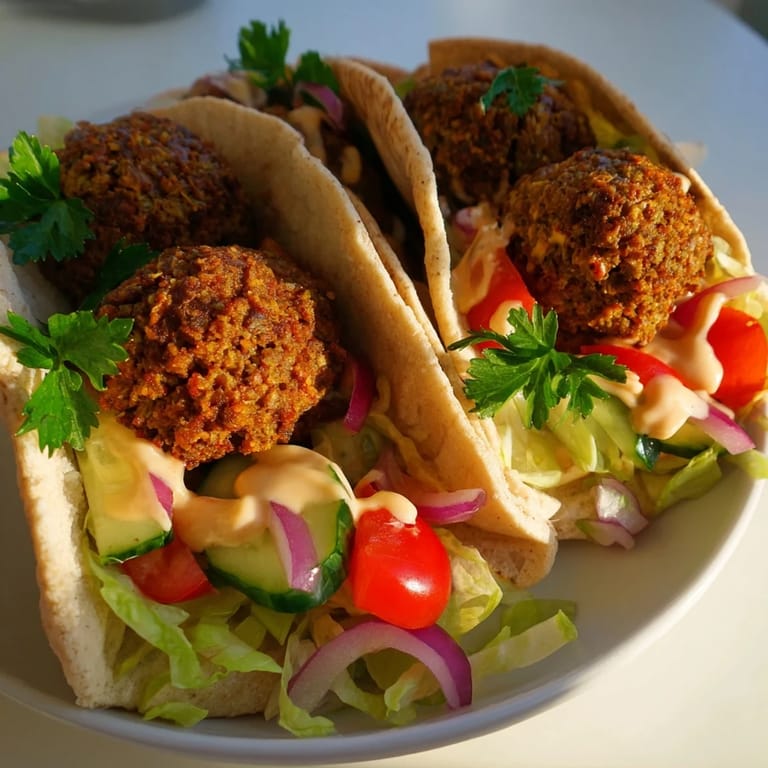
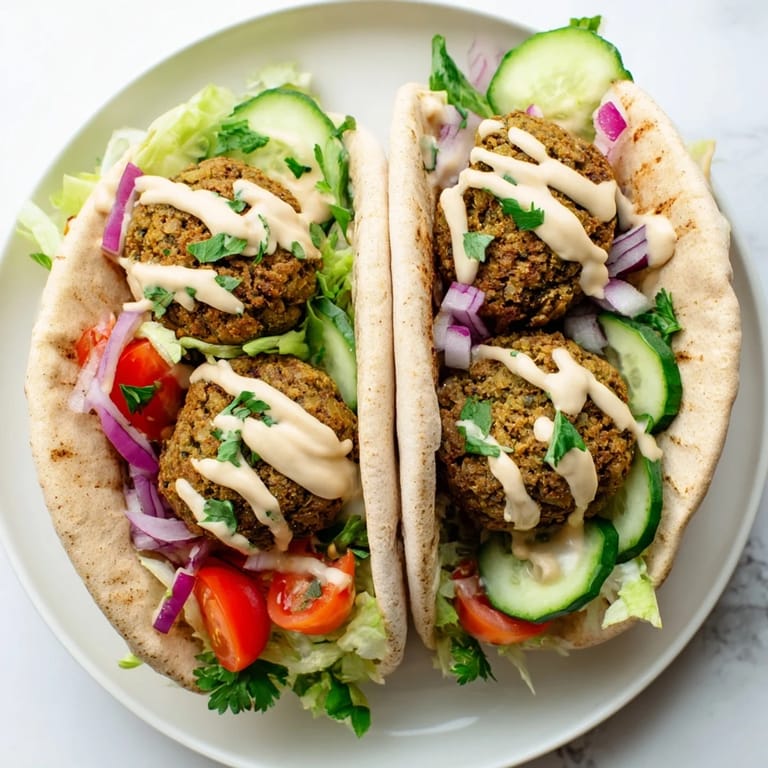
- Slice your pita in half, stuff it gently with lettuce first (it acts as a barrier so the bread doesn't get soggy), then add tomatoes, cucumber, onion, and three or four falafel pieces. Drizzle generously with tahini sauce and finish with fresh parsley.
 Save to Pinterest
 There was a Tuesday evening when I made this for my sister after she'd had a genuinely awful day, and she sat at the kitchen counter watching the falafel fry, just breathing in the smell. No big conversation, no advice—just food doing what food does best, turning a rough moment into something quieter and warmer. That's when I understood this recipe was never just about lunch or dinner; it's about creating a small, edible kindness.
The Magic of Fresh Herbs
The best version of this dish is the one where you don't hold back on the parsley and cilantro—they're not just garnish or flavoring, they're the whole personality of the falafel. The green you see speckled throughout should be substantial enough that someone could guess fresh herbs are in there just by looking. If your herbs are wilting or past their prime, grab fresh ones; the difference is genuinely noticeable in every bite.
Oil Temperature and Timing
Getting the oil temperature right is the difference between falafel that's golden and satisfying and falafel that's either greasy or hard. A kitchen thermometer removes all the guesswork, but if you don't have one, drop a tiny piece of the mixture into the oil—if it sizzles and rises immediately, you're ready. The sound and speed matter; trust what your senses are telling you more than any timer.
Building the Perfect Pita Pocket
Assembly is simple but there's definitely a technique that makes everything work better—it's all about layering strategically so nothing gets soggy and every element stays in place. Start with lettuce as your base layer, since it acts as insulation between the warm bread and wet vegetables. Warm your pita just enough that it's soft and pliable, because a cold pita cracks and tears while a properly warmed one bends cooperatively.
- Layer vegetables from densest to lightest—tomatoes first, then cucumber, then the red onion on top so it doesn't weigh everything down.
- Add the falafel pieces last, just before drizzling with tahini, so they stay at the forefront of each bite.
- Drizzle tahini sauce along the inside of the pita before stuffing rather than after, which helps it all stay together as you eat.
 Save to Pinterest
 There's real joy in a meal this simple and this satisfying, especially when you know you made it from scratch. Every element here—from the herbs to the crispy exterior to the cool tahini sauce—works together in a way that feels both comforting and a little bit celebratory.
Recipe FAQs
- → How do I keep falafel crispy after frying?
Drain falafel on paper towels immediately after frying to remove excess oil and keep them crisp. Serving right away helps maintain the texture.
- → Can falafel be baked instead of fried?
Yes, for a lighter option, bake falafel at 400°F (200°C) for 20–25 minutes, turning halfway to ensure even crisping.
- → What is tahini sauce made from?
Tahini sauce is made by whisking sesame paste with lemon juice, garlic, salt, and cold water to create a creamy drizzle that complements the falafel.
- → Can I prepare falafel mixture ahead of time?
Absolutely, refrigerate the falafel mixture for about 30 minutes before shaping and frying to improve handling and flavor melding.
- → What vegetables pair well inside the pita?
Fresh lettuce, diced tomatoes, sliced cucumber, and red onion add crisp texture and balance to the rich falafel and tahini sauce.