 Save to Pinterest
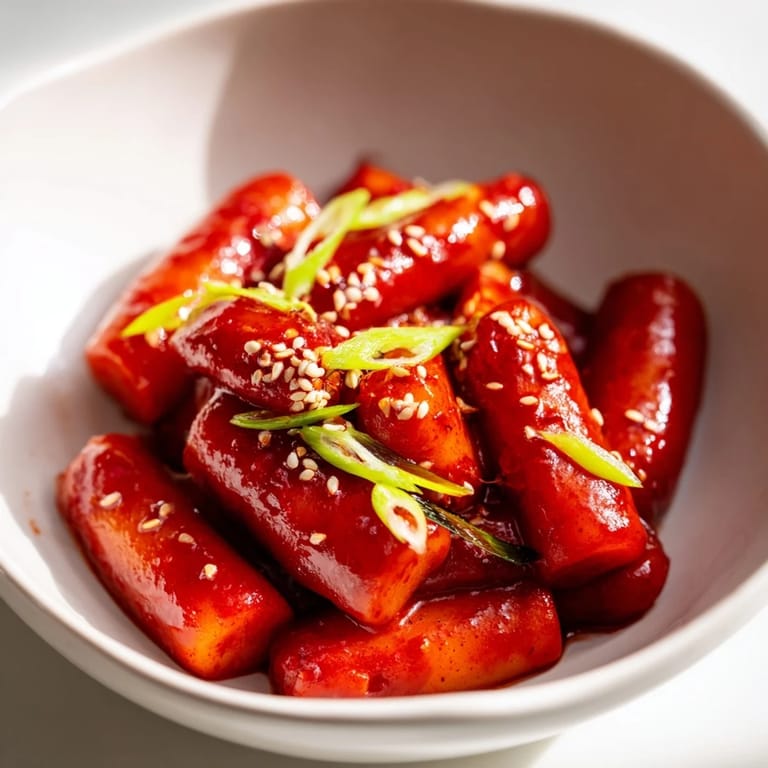
 The first bite of tteokbokki I ever had was from a paper cup on a cold Seoul street, steam rising into the night air. The chewy rice cakes coated in that glossy red sauce were nothing like anything I'd tasted before. I stood there under a streetlamp, chopsticks in hand, watching locals queue up without hesitation. That memory stuck with me until I finally learned to make it at home, and now it's the dish I turn to when I need comfort with a little heat.
I made this for a group of friends who'd never tried Korean food, and I watched their faces light up with each bite. One friend went back for thirds, sauce smeared on her chin, declaring it her new favorite thing. We sat around the table long after the pot was empty, talking and laughing, the warmth of the gochujang still tingling on our lips. That night, tteokbokki became more than a recipe for me—it became a way to bring people together.
Ingredients
- Korean rice cakes (tteok): These cylindrical beauties are the heart of the dish, chewy and satisfying when cooked just right. If they're refrigerated or frozen, always soak them first or they'll stay tough in the center.
- Gochujang (Korean chili paste): This fermented paste brings the signature sweet heat that defines tteokbokki. Don't skip it or substitute with regular chili paste, the flavor won't be the same.
- Gochugaru (Korean chili flakes): These add a vibrant red color and a smoky, fruity heat that layers beautifully with the gochujang. Start with less if you're heat shy, you can always add more.
- Dried kelp (kombu) and anchovies: They build a savory broth that anchors the sauce, giving it depth without being fishy. Remove them before adding the sauce or they'll overpower the dish.
- Soy sauce: It adds umami and saltiness, balancing the sweetness of the honey and sugar. Use a good quality one, it makes a difference in the final taste.
- Sugar and honey: These two work together to create that glossy, caramelized coating that clings to each rice cake. The honey adds a floral note that plain sugar can't replicate.
- Garlic: Fresh minced garlic brings a sharp, aromatic punch that mellows as it simmers. I always use a little more than the recipe calls for because I love the way it perfumes the kitchen.
- Green onions: They add a fresh, grassy bite that cuts through the richness of the sauce. Slice them on a diagonal for a prettier presentation.
- Onion and cabbage: These vegetables soak up the sauce and add texture, making the dish more substantial. The cabbage wilts into silky ribbons that I find irresistible.
- Boiled eggs: They're optional but they soak up the spicy sauce like little flavor sponges. I always include them because they make the dish feel more complete.
- Sesame seeds: A final sprinkle adds a nutty crunch and makes everything look more polished. Toast them lightly if you have time, it deepens their flavor.
Tired of Takeout? 🥡
Get 10 meals you can make faster than delivery arrives. Seriously.
One email. No spam. Unsubscribe anytime.
Instructions
- Wake up the rice cakes:
- Soak them in warm water for 10 minutes if they've been chilling in the fridge or freezer. This softens them just enough so they cook evenly and don't stay hard in the middle.
- Build the broth:
- Simmer water with kelp and anchovies for 10 minutes, letting their flavors meld into a savory base. Pull them out before they turn the broth bitter, you just want their essence.
- Mix the sauce:
- Stir gochujang, gochugaru, soy sauce, sugar, honey, and garlic into the warm broth until everything dissolves into a glossy red mixture. Taste it now and adjust the heat or sweetness to your liking.
- Add the rice cakes and vegetables:
- Toss in the soaked rice cakes, onion, and cabbage, then bring everything to a gentle boil. Stir occasionally so the rice cakes don't clump together or stick to the bottom.
- Simmer until thickened:
- Let it bubble away for 10 to 15 minutes, watching as the sauce reduces and clings to each rice cake. The rice cakes should be soft and chewy, not mushy.
- Finish with freshness:
- Add green onions and boiled eggs in the last 2 minutes so they warm through without overcooking. The green onions should still have a little bite.
- Serve it hot:
- Transfer everything to a serving dish and sprinkle sesame seeds over the top. Serve immediately while the sauce is still glossy and the rice cakes are at their chewiest.
 Save to Pinterest
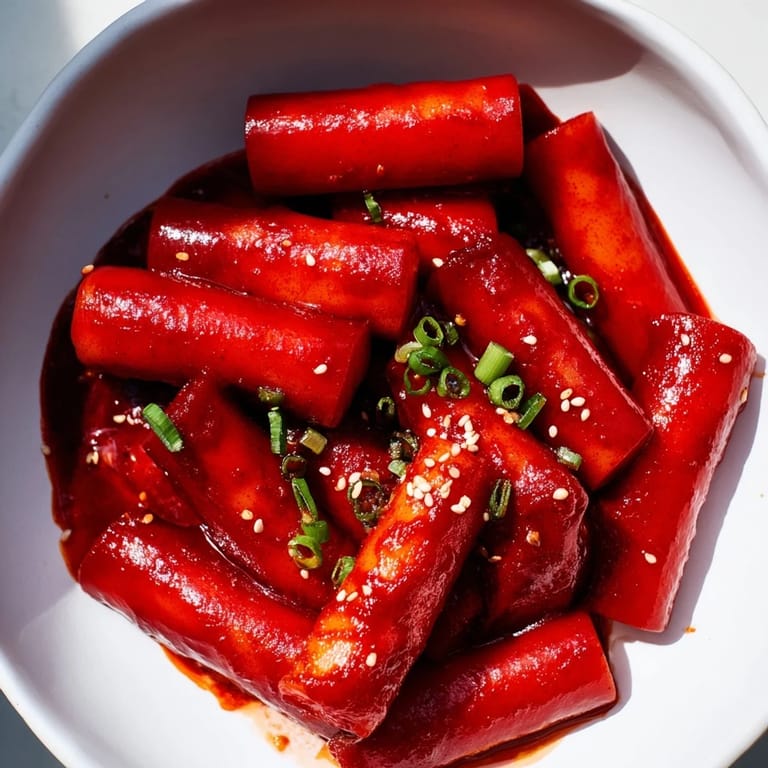
 One rainy afternoon, I made tteokbokki just for myself and ate it straight from the pot, standing at the stove. The kitchen smelled like garlic and chili, the windows fogged up, and I felt completely at peace. It wasn't fancy or Instagram worthy, but it was exactly what I needed. Sometimes the best meals are the ones no one else sees.
Making It Your Own
Tteokbokki is endlessly adaptable once you master the base sauce. I've added fish cakes sliced into strips for extra chew, and they soak up the sauce beautifully. Some nights I toss in ramen noodles during the last few minutes for a heartier meal. Cheese is another surprising addition, melted on top it turns the dish creamy and indulgent. Experiment with vegetables like mushrooms, zucchini, or bok choy, whatever's in your fridge will probably work.
Adjusting the Heat
The spice level in tteokbokki can be intimidating if you're not used to gochugaru and gochujang. Start with half the gochugaru and taste the sauce before adding more, you can always build heat but you can't take it away. If it's too spicy after cooking, stir in a spoonful of honey or a splash of cream to mellow it out. I've also served it with a side of plain rice for friends who needed a break between bites. The key is making it enjoyable for your palate, not following the recipe blindly.
Serving Suggestions
Tteokbokki is traditionally street food, meant to be eaten with chopsticks straight from a paper cup. At home, I serve it in shallow bowls with pickled radish on the side to cut through the richness. Steamed dumplings or crispy fried mandu make it a fuller meal without much extra effort. A cold glass of barley tea or a light beer balances the heat perfectly.
- Garnish with extra sesame seeds and a drizzle of sesame oil for a richer finish.
- Serve with kimchi or pickled vegetables to add acidity and crunch.
- Leftovers reheat beautifully with a splash of water to loosen the sauce.
 Save to Pinterest
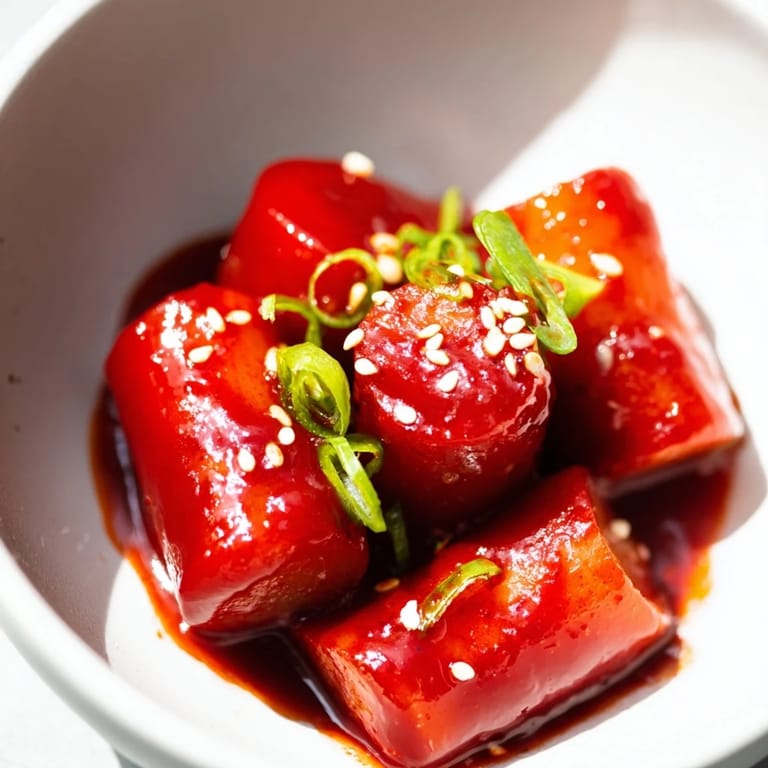
 Every time I make tteokbokki, I'm reminded of that first taste under a Seoul streetlamp, and it never gets old. I hope it brings you the same warmth and comfort it's brought me, whether you're feeding a crowd or just yourself on a quiet night.
Recipe FAQs
- → What are Korean rice cakes and where can I find them?
Korean rice cakes (tteok) are cylindrical, chewy cakes made from glutinous rice flour. They're available fresh or frozen in Asian grocery stores, online retailers, or specialty markets. Fresh cakes cook faster, while frozen ones benefit from a 10-minute soak in warm water before use.
- → Can I make this dish vegetarian?
Yes, tteokbokki is naturally vegetarian when prepared with vegetable-based broth. Omit the dried anchovies and use kelp-based dashi or vegetable stock instead. All other ingredients remain the same, creating an equally flavorful vegetarian version.
- → How spicy is this dish and can I adjust the heat level?
The spice level comes primarily from gochujang and gochugaru. This version offers moderate heat. Reduce gochugaru for milder flavor or increase it for more kick. Start with less chili flakes and adjust to your preference during cooking.
- → What's the difference between gochujang and gochugaru?
Gochujang is a thick, fermented chili paste with deep umami flavors and a slightly sweet profile. Gochugaru consists of coarse chili flakes with a fresher, more intense heat. Both are essential for authentic tteokbokki's complex spice balance.
- → Can I prepare rice cakes in advance?
Yes, soak rice cakes up to 2 hours ahead and store them in the refrigerator. However, cook them within a few hours of soaking to prevent them from becoming overly soft. For best results, cook fresh tteokbokki immediately before serving.
- → What side dishes pair well with tteokbokki?
Serve alongside pickled radish (danmuji), steamed dumplings, or kimchi for a traditional Korean meal. Rice is optional but popular. Light sides balance the rich, spicy sauce and complement the chewy texture of the rice cakes.