 Save to Pinterest
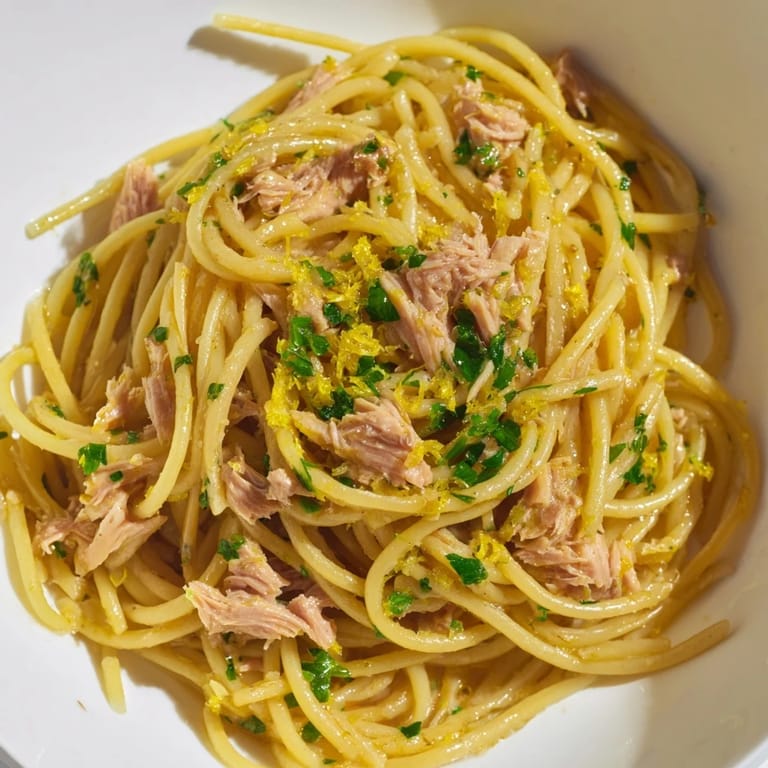
 There's something about standing at the stove on a Tuesday evening, watching garlic turn golden in olive oil, that makes you realize you don't need much to feel like you're cooking something special. This lemon-garlic tuna spaghetti came together almost by accident one night when I had exactly three things in my pantry: a can of tuna, dried spaghetti, and a lemon that had been sitting on the counter a bit too long. Twenty-five minutes later, I had something so bright and satisfying that it became my go-to when there's no time but plenty of appetite. It's the kind of dish that doesn't ask for much but delivers everything.
I made this for my sister after she mentioned being tired of the same rotation of weeknight meals, and watching her face light up when she twirled that first forkful told me everything. The kitchen smelled incredible—like a little corner of the Mediterranean had somehow moved into my apartment. She asked for the recipe before she'd even finished eating, which is the kind of compliment that sticks with you.
Ingredients
- Spaghetti, 400g: Dried spaghetti is your canvas here; the slight firmness helps it hold onto the sauce without getting mushy.
- Olive oil, 2 tbsp: This is where flavor lives, so don't reach for the cheap bottle—it makes a real difference in the final taste.
- Garlic cloves, 3, finely sliced: Slicing instead of mincing gives you these tender little morsels that won't disappear into the sauce.
- Lemon, 1 whole: You need both the zest and juice; the zest brings brightness, the juice ties everything together with acidity that feels almost sharp and alive.
- Tuna in olive oil, 2 × 160g cans: The olive oil in the can is actually part of your sauce, so don't drain it aggressively—a gentle squeeze is all you need.
- Red pepper flakes, 1/2 tsp: Optional, but it adds a whisper of heat that makes people pause and ask what's in this.
- Fresh flat-leaf parsley, 1/4 cup chopped: Add it at the end to keep it fresh and vibrant; cooked parsley loses its character.
- Pasta cooking water, 1/4 cup reserved: This starchy liquid is what transforms everything into a silky, clinging sauce.
- Salt and black pepper: Taste as you go; the lemon is already doing a lot of the work, so you might need less salt than usual.
Tired of Takeout? 🥡
Get 10 meals you can make faster than delivery arrives. Seriously.
One email. No spam. Unsubscribe anytime.
Instructions
- Get the pasta water ready:
- Bring a big pot of salted water to a rolling boil—this is your only chance to season the pasta properly. Drop in the spaghetti and cook it until it's just tender enough to bite through but still has a little resistance; that's al dente.
- Build the flavor base:
- While pasta cooks, warm olive oil in a skillet over medium heat and add your sliced garlic. You want to hear a gentle sizzle and smell something absolutely intoxicating, but watch it carefully—burned garlic is bitter and ruins everything.
- Bring the tuna in:
- Break apart the drained tuna gently with a spoon, stirring it into the garlic. Add the lemon zest, lemon juice, and a pinch of red pepper flakes if you're using them, then let it warm through for a couple of minutes until the flavors start talking to each other.
- Marry the pasta and sauce:
- Add your cooked, drained spaghetti directly to the skillet and toss everything together, letting the noodles coat in that golden, lemony mixture. Pour in the reserved pasta water little by little—you're aiming for a silky finish, not a soup.
- Final touches:
- Stir in the fresh parsley, taste it, and adjust salt and pepper until it feels right. Plate it up while it's hot and happy.
 Save to Pinterest
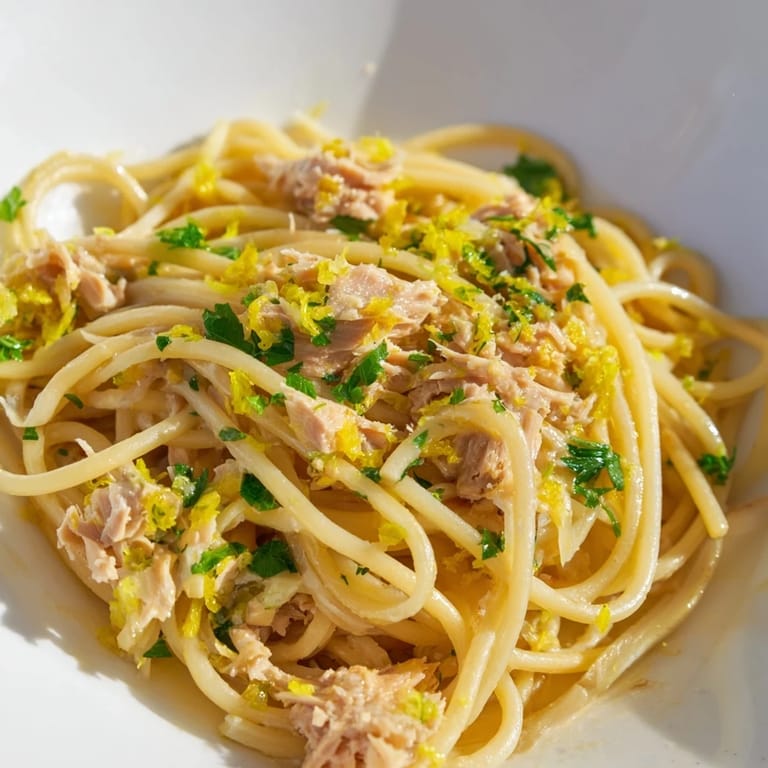
 There's a moment about halfway through eating this when the flavors have warmed up inside you, and you realize you're actually full but you keep twirling just one more forkful. That's when I know a recipe has done its job—when it stops being about hunger and becomes about the simple pleasure of tasting something bright and well-made.
The Magic of Pantry Staples
This dish taught me that having quality canned tuna, good olive oil, and fresh lemons on hand means you're always just twenty-five minutes away from a real dinner. There's no pretense here, no fancy techniques or hard-to-find ingredients—just an understanding that simple things done well are often better than complicated things done mediocrely. I've stopped thinking of canned tuna as a backup plan and started thinking of it as a reliable friend.
Variations and Additions
Once you've made this basic version a few times, you'll start seeing ways to bend it. A handful of halved cherry tomatoes adds sweetness and color, or a couple of tablespoons of capers bring a briny sharpness that plays beautifully with the lemon. Some nights I'll add a pinch more red pepper flakes if I'm feeling bold, or toss in a handful of fresh mint if it's summer and I want something even more alive.
Pairing and Serving
This pasta loves a crisp white wine—something like Pinot Grigio or Sauvignon Blanc that echoes the lemon and doesn't fight the delicate fish. Serve it immediately while the pasta is still warm and the parsley is still green, and always bring a lemon wedge to the table so people can squeeze a little extra brightness over their plate if they want it. It's humble food, but treated with a little care and attention, it feels elegant.
- A simple green salad with vinaigrette on the side cuts through the richness and keeps the meal feeling balanced.
- Warm bread for soaking up any sauce left on the plate is not optional—it's essential.
- Eat this while it's still hot; it's one of those dishes that loses its magic once it cools down.
 Save to Pinterest
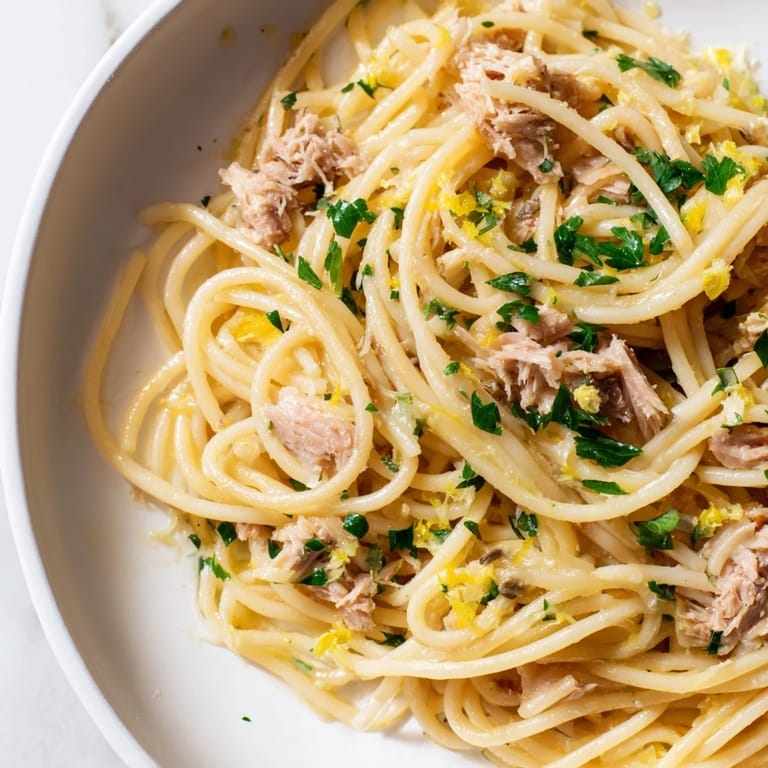
 Food this straightforward reminds you why you cook in the first place: not to impress, but to nourish and feel a little lighter, a little brighter. Come back to this whenever you need something honest and good.
Recipe FAQs
- → How do I keep the tuna moist in the pasta?
Use tuna packed in olive oil and drain it carefully. Tossing it gently into the warm sauce helps keep it flaky and moist.
- → Can I add extra ingredients to this dish?
Yes, adding capers or halved cherry tomatoes adds extra richness and bursts of flavor without overpowering the main components.
- → What’s the best way to cook spaghetti for this meal?
Cook the spaghetti until al dente in salted water and save some pasta cooking water to create a silky sauce when combined with the tuna mixture.
- → How can I adjust the heat level?
Include or omit crushed red pepper flakes based on your preferred spice tolerance to control the gentle kick in the dish.
- → What kind of wine pairs well with this dish?
Light, crisp white wines like Pinot Grigio or Sauvignon Blanc beautifully complement the lemon and tuna flavors.