 Save to Pinterest
 My neighbor Yuki taught me to make okonomiyaki on a humid Saturday when my air conditioner had broken and neither of us wanted to turn on the oven. She showed up with a bag of cabbage, a bottle of something brown and mysterious, and a grin. We stood in front of my stovetop fan, flipping these enormous savory pancakes while she told me stories about buying them from street carts in Osaka after work. The smell of sizzling cabbage and the sight of those bonito flakes dancing from the steam made my tiny kitchen feel like somewhere far away and exciting.
The first time I made okonomiyaki for friends, I panicked because my batter looked too thick, so I added extra dashi and ended up with pancakes that barely held together. Everyone still devoured them, sauce dripping down their wrists, arguing over who got the crispiest edges. One friend declared it the best thing Id ever cooked, which was generous considering the structural integrity issues. That night taught me that okonomiyaki is forgiving, and that imperfect food shared with good people always tastes right.
Ingredients
- All purpose flour: The backbone of your batter, just enough to hold everything together without making it heavy or doughy.
- Dashi stock: This adds a subtle umami depth that water cannot match, though water works in a pinch if you boost the toppings.
- Eggs: They bind the vegetables and give the pancake a custardy richness in the center.
- Salt: Just a pinch to wake up all the other flavors without overpowering the delicate dashi.
- Baking powder: A small amount creates those airy pockets that keep the pancake from turning into a dense fritter.
- Green cabbage: The star ingredient, shredded finely so it wilts into sweet, tender ribbons as it cooks.
- Green onions: They add a sharp, grassy bite that cuts through the richness of the toppings.
- Carrot: Julienned thin, it brings a hint of sweetness and a pop of color throughout.
- Bean sprouts: Optional but wonderful for extra crunch and a fresh, clean flavor.
- Bacon or pork belly: Crispy, salty, smoky, and completely optional if you want to keep it lighter or vegetarian.
- Cooked shrimp: Chopped small and folded in, they make each bite feel a little more special.
- Okonomiyaki sauce: Sweet, tangy, and slightly smoky, this is what makes the dish unmistakably itself.
- Japanese mayonnaise: Richer and slightly sweeter than American mayo, it adds creaminess and visual drama when drizzled.
- Bonito flakes: Papery thin and alive with heat, they bring a smoky, oceanic flavor that is pure magic.
- Aonori: Dried seaweed flakes that taste like the sea in the best possible way.
- Pickled ginger: Bright, tart, and palate cleansing, it balances all the richness on the plate.
Tired of Takeout? 🥡
Get 10 meals you can make faster than delivery arrives. Seriously.
One email. No spam. Unsubscribe anytime.
Instructions
- Mix the batter:
- Whisk together the flour, dashi, eggs, salt, and baking powder until smooth and lump free, like a thick crepe batter. Let it rest for a minute while you prep the vegetables so the flour hydrates fully.
- Fold in the vegetables:
- Stir in the cabbage, green onions, carrot, and bean sprouts until every shred is coated in batter. If using shrimp, fold them in now so they are evenly distributed.
- Heat your skillet:
- Warm a large nonstick skillet or griddle over medium heat and add a thin layer of oil. You want it hot enough to sizzle but not smoking.
- Shape the pancake:
- Pour about a quarter of the batter onto the skillet and gently spread it into a round, about half an inch thick. Do not press down hard or you will squeeze out all the air.
- Add the pork or bacon:
- If using, lay two halves of bacon or pork belly across the top of the pancake. They will crisp up and become part of the structure as it cooks.
- Cook the first side:
- Let it cook undisturbed for 4 to 5 minutes until the bottom is deep golden brown and the edges look set. Resist the urge to peek too early or it might fall apart.
- Flip carefully:
- Slide a wide spatula underneath and flip in one confident motion. Cook another 4 to 5 minutes until the second side is golden and the center is cooked through.
- Repeat with remaining batter:
- Keep the finished pancakes warm in a low oven while you cook the rest. Each one gets better as you learn the rhythm of your pan.
- Top and serve:
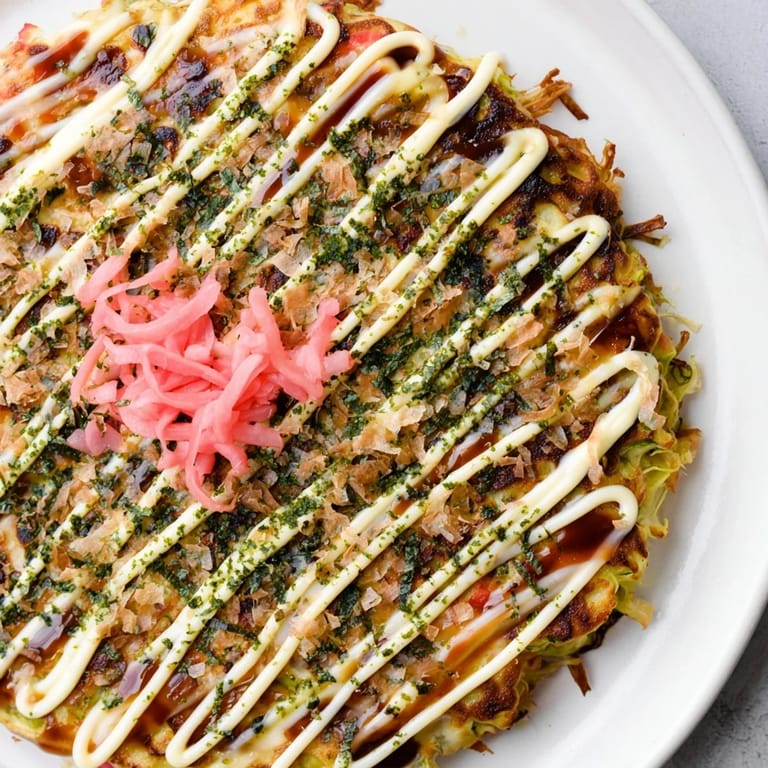
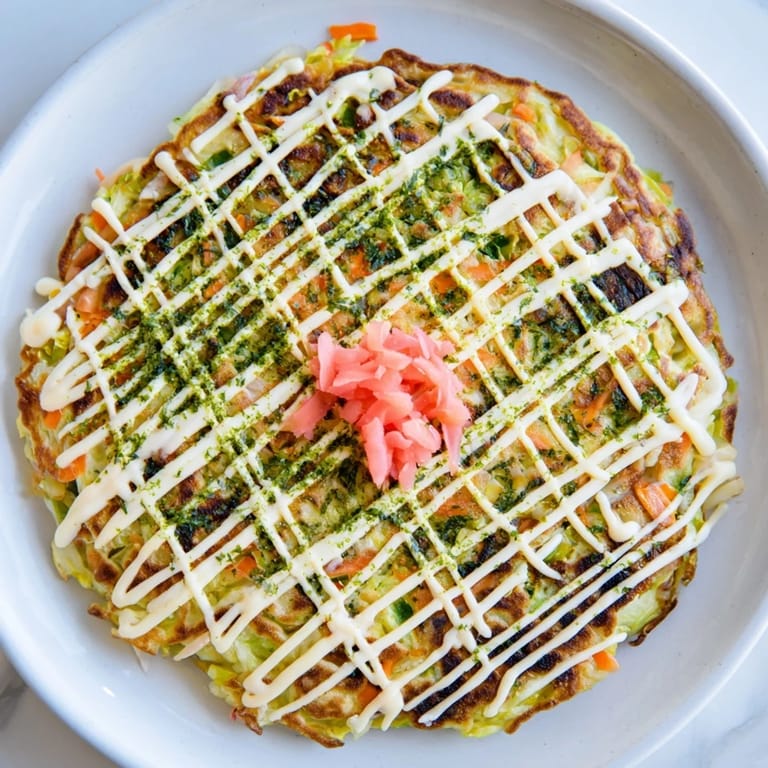
- Transfer to plates and drizzle with okonomiyaki sauce and mayo in a crisscross pattern. Finish with a generous shower of bonito flakes, aonori, and pickled ginger, then serve immediately while everything is hot.
 Save to Pinterest
 I made okonomiyaki for my mom on her birthday last year, and she got quiet after the first bite. She said it reminded her of a trip she took to Japan in her twenties, back when she was brave enough to eat anything a stranger handed her. We sat at my kitchen table, bonito flakes still twitching on our plates, and she told me stories I had never heard before. Food has this way of unlocking memories you did not know people were holding.
Choosing Your Fillings
Okonomiyaki means what you like, grilled, so treat the ingredient list as a starting point rather than a rulebook. I have added leftover roast chicken, sauteed mushrooms, corn kernels, and even crumbled cheese when I was feeling adventurous. The cabbage is non negotiable because it gives the pancake its structure and sweetness, but almost everything else is up for improvisation. Just keep the batter to vegetable ratio roughly the same so the pancake holds together when you flip it.
Getting the Toppings Right
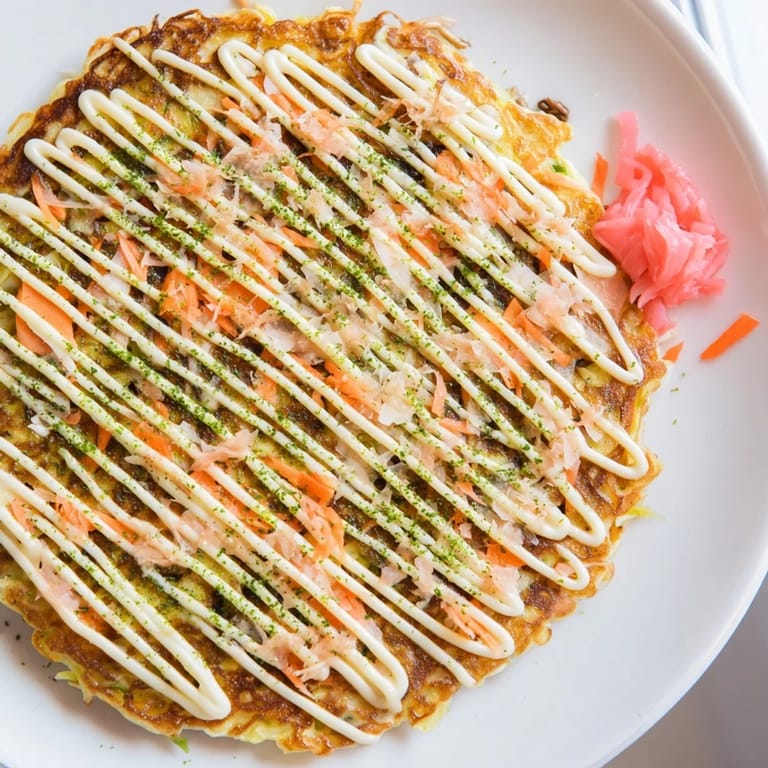
The toppings are not optional, they are the whole point. Okonomiyaki sauce is sweeter and thicker than teriyaki, with a hint of fruitiness that balances the savory pancake. Japanese mayo is tangier and richer than American versions, and it comes in a squeeze bottle that makes those perfect zigzag lines. If you cannot find bonito flakes, the dish will still taste good, but you will miss that smoky, umami punch and the hypnotic way they move. Aonori adds a briny, seaweed flavor that makes everything taste more complex, and pickled ginger cuts through the richness with a sharp, palate cleansing bite.
Serving and Storage
Okonomiyaki is best eaten immediately, straight from the skillet, when the edges are still crispy and the center is soft. If you need to make them ahead, keep them warm in a 200 degree oven on a wire rack so they do not steam and get soggy. Leftovers can be stored in the fridge for up to two days and reheated in a skillet over medium heat until warmed through. The toppings will lose some of their magic, so consider adding fresh bonito flakes and aonori after reheating.
- Pair with cold Japanese beer or sake for an authentic street food experience.
- Serve with a simple cucumber salad or miso soup to round out the meal.
- Let everyone top their own pancake at the table so they can control the sauce and mayo ratio.
 Save to Pinterest
 There is something deeply satisfying about standing at the stove, flipping these golden pancakes while the kitchen fills with the smell of caramelized cabbage and salty pork. It is the kind of cooking that makes you feel competent and creative at the same time, and the kind of meal that turns a regular weeknight into something worth remembering.
Recipe FAQs
- → What is okonomiyaki sauce?
Okonomiyaki sauce is a savory Japanese condiment similar to Worcestershire sauce with a slightly sweet undertone. You can find it bottled at Asian markets or make a substitute by mixing equal parts ketchup and Worcestershire sauce with a splash of soy sauce.
- → Can I make okonomiyaki without seafood?
Absolutely. Omit the shrimp and bonito flakes for a vegetarian version. The pancakes will still be delicious with just the cabbage, vegetables, and optional bacon or pork belly. You can add mushrooms or corn for extra flavor.
- → How do I prevent the pancakes from falling apart when flipping?
Let the pancakes cook for 4-5 minutes on the first side until the bottom is golden and set before flipping. Use a wide spatula and flip in one confident motion. The batter should be thick enough to hold together once it's cooked through on the first side.
- → What are bonito flakes and can I substitute them?
Bonito flakes (katsuobushi) are dried, fermented skipjack tuna that add umami flavor and look decorative as they dance from the heat. If unavailable, you can skip them or use a sprinkle of furikake seasoning for similar visual appeal and flavor depth.
- → Can I prepare the batter ahead of time?
Yes, you can mix the dry ingredients and prepare the vegetables a few hours in advance. Keep them separate and combine just before cooking to prevent the batter from becoming too wet and the vegetables from releasing excess moisture.
- → What drink pairs well with okonomiyaki?
Traditionally served with sake or light Japanese beer like pilsner. Cold green tea or a crisp white wine also complement the savory richness beautifully. A simple citrus soda works well for non-alcoholic options.