 Save to Pinterest
 There was this Tuesday when my kitchen smelled like cumin and roasted vegetables all at once, and I realized I'd been eating the same sad salads for weeks. A friend mentioned tahini yogurt almost in passing, and something clicked—what if I built a whole bowl around that creamy, tangy base? The cauliflower would go golden and crispy, the lentils would carry bright lemon notes, and suddenly lunch wasn't an obligation anymore. That bowl changed how I think about vegetarian cooking.
I made this for a potluck once and watched people go back for thirds, which is when I knew it wasn't just something I loved—it genuinely satisfied people who'd never tried tahini before. My neighbor asked for the recipe right there, and I realized this dish had this quiet way of converting skeptics into believers without any fuss or explanation needed.
Ingredients
- Cauliflower: A full head breaks down into perfect bite-sized florets that roast into caramelized gold; don't cut them too small or they'll shrivel.
- Olive oil: Use good quality here since it coats everything—it's worth it.
- Ground cumin and smoked paprika: These two make cauliflower taste sophisticated, like you planned this meal for days.
- Green or brown lentils: They hold their shape better than red lentils, which means you get texture instead of mush.
- Bay leaf: Drop it in while lentils cook, then fish it out—it whispers flavor without announcing itself.
- Lemon (zest and juice): Fresh lemon is non-negotiable; bottled will taste thin and sad by comparison.
- Red onion: Dice it small and keep it raw for that sharp, crisp note that cuts through richness.
- Fresh parsley: Stir most into the warm lentils so it wilts slightly and releases oils.
- Greek yogurt: Full-fat is creamier, but don't stress if you use regular—it still works beautifully.
- Tahini: Stir it well before measuring; separation happens, and unmixed sesame paste is gritty and bitter.
- Garlic: Grate it finely so it distributes into the yogurt instead of sitting in chunks.
- Toasted sesame seeds: Toast them yourself if you can—they taste infinitely better than pre-toasted and take 90 seconds.
Tired of Takeout? 🥡
Get 10 meals you can make faster than delivery arrives. Seriously.
One email. No spam. Unsubscribe anytime.
Instructions
- Heat your oven and prep your stage:
- Preheat to 425°F and line a baking sheet with parchment paper so nothing sticks and cleanup stays minimal. This temperature matters—it's hot enough to caramelize but not so aggressive that you end up with burnt edges and raw centers.
- Season and spread cauliflower:
- Toss florets with olive oil, cumin, smoked paprika, salt, and pepper until every piece glistens. Spread them in a single layer where they can actually touch the hot pan, not pile on top of each other.
- Roast until golden:
- Put them in for 25–30 minutes, stirring halfway through so the other side gets its turn at caramelization. They're done when the edges look almost burnt and a fork slides through the centers.
- Cook lentils while cauliflower roasts:
- Combine lentils, water, bay leaf, and salt in a saucepan and bring to a boil. Then reduce heat and simmer uncovered—this keeps them from getting waterlogged—for 18–20 minutes until they're tender but still hold their shape.
- Dress warm lentils immediately:
- While they're still steaming, stir in lemon zest, juice, olive oil, diced red onion, and parsley so the warmth coaxes out flavors and the onion softens slightly. Taste and adjust salt and lemon to your preference.
- Make the tahini yogurt sauce:
- Whisk Greek yogurt, tahini, lemon juice, cumin, and grated garlic together until smooth and creamy. If it's too thick, loosen it with a splash of water or lemon juice.
- Assemble your bowl:
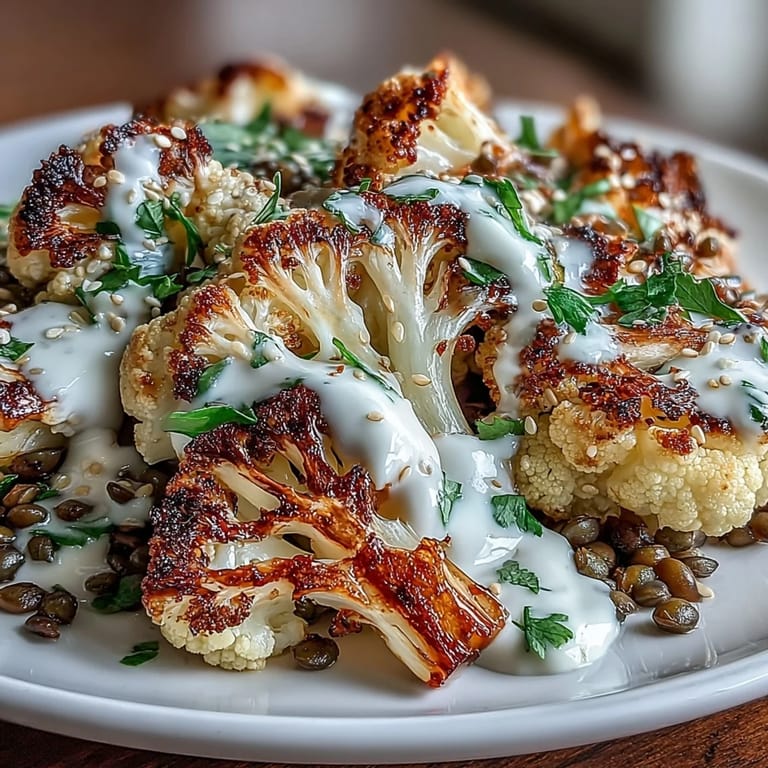
- Spread lentils on a platter or individual plates, arrange roasted cauliflower on top, and drizzle generously with the cumin tahini yogurt so every bite gets some creamy sauce.
- Finish with flourish:
- Sprinkle with toasted sesame seeds and fresh cilantro or parsley, and place lemon wedges on the side for people who want extra zing.
 Save to Pinterest
 I remember eating this straight from a small bowl at my kitchen counter around 7 PM on a random Wednesday, not thinking about it much, and somewhere halfway through I realized my shoulders had relaxed. It's one of those dishes that does that—feeds you in more ways than just the obvious ones.
Playing With Texture and Temperature
The magic here is that nothing has to be the same temperature for it to work beautifully. Serve it warm from the oven, or let it cool to room temperature and eat it later—the flavors actually deepen as things sit together. Some people like to warm the yogurt sauce gently before drizzling, though I prefer it cool against hot cauliflower. The contrast of temperatures makes each element taste more like itself, somehow.
Making It Your Own
This recipe is a template that welcomes riffing—add pomegranate seeds for burst of tartness and color, scatter toasted pine nuts or walnuts for earthiness, or toss in some chopped fresh mint if you want something more cooling and bright. I've thrown in roasted chickpeas for extra protein and crunch, and it completely transforms into something different but equally good. The core stays solid no matter what you add, which means you can cook this fifty times without it ever feeling boring.
- Try stirring harissa or a pinch of cayenne into the tahini yogurt if you like heat without overpowering.
- Roast the lentils in the oven instead of cooking them on the stovetop for a nuttier, deeper flavor.
- Make it vegan by using dairy-free yogurt and checking that your tahini is pure sesame with no additives.
Storage and Next Steps
Leftovers keep well in separate containers for about three days—store the tahini yogurt separately so it doesn't soak into everything and turn mushy. You can reheat components individually or eat it cold straight from the fridge. I've also layered leftovers into a grain bowl with rice or farro the next day and it felt like a completely different meal.
 Save to Pinterest
 This bowl feeds four people or one very hungry person twice, and it costs a fraction of what you'd pay at any trendy restaurant serving the same general idea. Make it when you need something that feels like self-care but actually nourishes you.
Recipe FAQs
- → Can I make this ahead of time?
Yes, all components can be prepared up to 2 days in advance. Store the roasted cauliflower, lemon lentils, and tahini yogurt separately in airtight containers. Reheat the cauliflower if serving warm, or bring everything to room temperature for assembly.
- → What lentils work best?
Green or brown lentils are ideal because they hold their shape during cooking. Avoid red lentils, which become too soft and mushy for this preparation. Rinse lentils thoroughly before cooking to remove any debris.
- → How do I prevent the tahini sauce from separating?
Whisk the tahini and lemon juice together first before adding the yogurt. This emulsifies the mixture. If the sauce thickens too much, simply whisk in a teaspoon of warm water at a time until reaching desired consistency.
- → Can I add other vegetables?
Absolutely. Roasted bell peppers, carrots, or sweet potatoes complement the flavors beautifully. You can roast them alongside the cauliflower, adjusting cooking time as needed based on vegetable size.
- → Is this dish freezer-friendly?
The roasted cauliflower and cooked lentils freeze well separately for up to 3 months. However, the tahini yogurt sauce is best enjoyed fresh. Make a fresh batch when you're ready to serve the thawed components.
- → What can I serve with this?
This dish stands beautifully as a complete vegetarian main. For a more substantial spread, serve alongside warm flatbread, quinoa, or couscous. A simple green salad with an acidic vinaigrette provides a nice contrast.