 Save to Pinterest
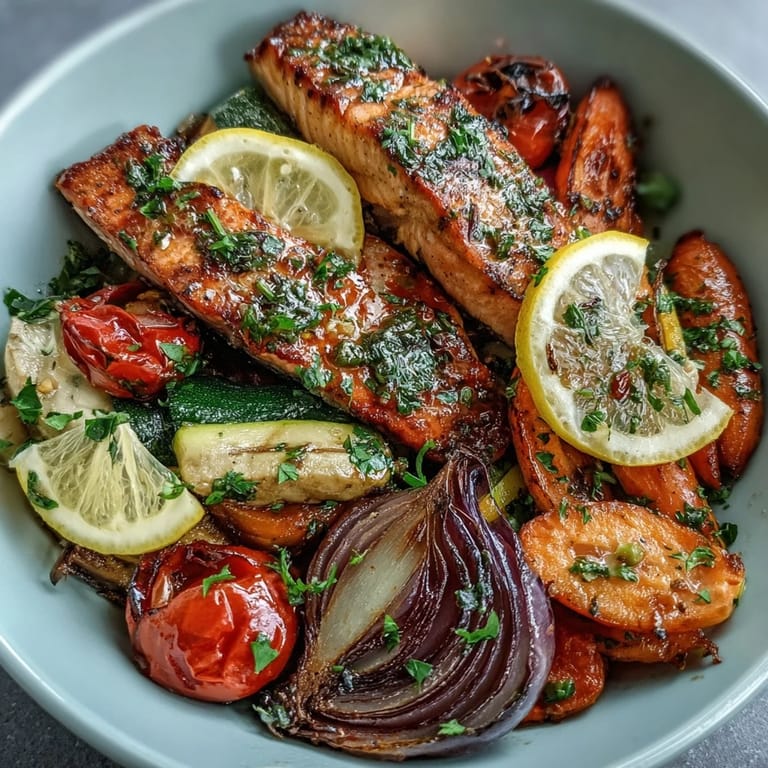
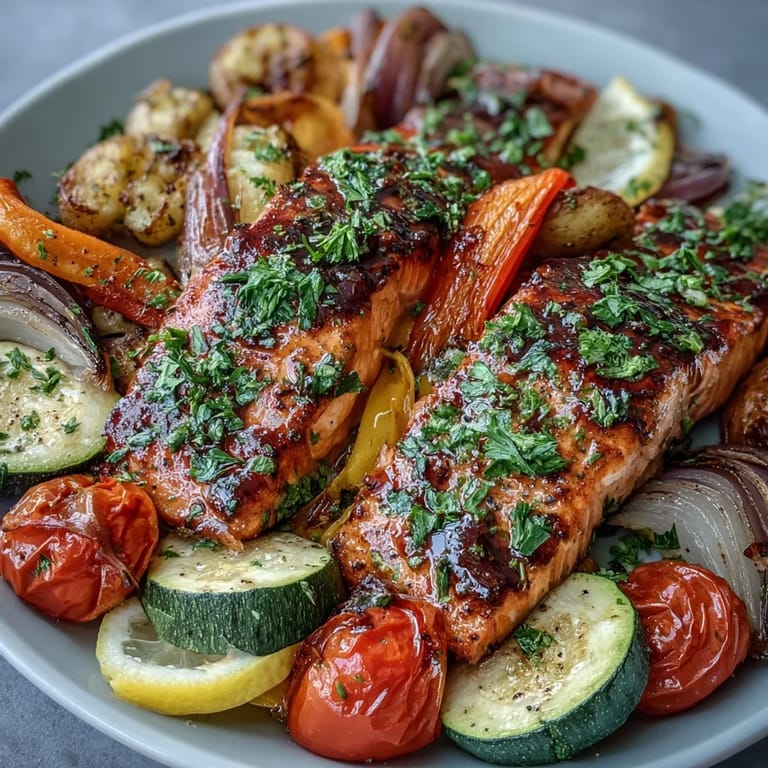
 There's something wonderfully honest about sheet pan dinners. I was standing in my kitchen on a Tuesday evening, staring at a beautiful salmon fillet and a handful of vegetables, when it hit me that I could stop overthinking and just roast it all together. The salmon turned out impossibly tender, the vegetables caramelized into something almost sweet, and I realized I'd accidentally stumbled onto my new favorite way to feed myself and whoever shows up hungry.
I made this for my sister last month when she was stressed about her new job, and watching her face light up when she bit into that salmon reminded me why simple food can sometimes be the most generous thing you offer someone. She asked for the recipe before she'd even finished eating, which felt like the highest compliment.
Ingredients
- Skinless salmon fillets (4 pieces, 5–6 oz each): Skinless makes everything easier since you're roasting, not pan-searing, and the flesh stays incredibly moist when it cooks gently with vegetables around it.
- Red onion (1 medium, cut into wedges): Onion wedges roast into something sweeter and softer than you'd expect, almost caramelized if you leave them long enough.
- Carrots (2 medium, sliced into ½-inch rounds): Thin rounds cook through evenly and get these little crispy edges that make them addictive.
- Red and yellow bell peppers (1 of each, sliced): The two colors aren't just pretty, they bring different sweetness levels and create that rainbow effect that makes people actually want to eat their vegetables.
- Zucchini (1 small, sliced into ½-inch half-moons): Half-moon shapes prevent them from disappearing into the pan and help them stay slightly firm through roasting.
- Cherry tomatoes (1 cup, halved): Halving them lets the insides caramelize and concentrate into little pockets of flavor, like tiny roasted jam.
- Olive oil (3 tablespoons total): Split between the vegetables and salmon, it's enough to encourage browning without making everything feel heavy.
- Dried Italian herbs (1 teaspoon): This is your shortcut to complexity, though fresh basil scattered at the end elevates it even more.
- Lemon zest and fresh parsley: These bright notes cut through the richness and remind your palate that this is spring on a plate, even in winter.
Tired of Takeout? 🥡
Get 10 meals you can make faster than delivery arrives. Seriously.
One email. No spam. Unsubscribe anytime.
Instructions
- Get Your Oven Ready:
- Preheat to 425°F and line your sheet pan with parchment paper or foil. This temperature is the sweet spot where vegetables caramelize without burning and salmon cooks through gently without drying out.
- Dress and Spread the Vegetables:
- Toss your onion, carrots, peppers, zucchini, and tomatoes with olive oil, herbs, salt, and pepper in a bowl, then spread them across the pan in one mostly even layer. You want some breathing room between pieces so they roast rather than steam.
- Give Vegetables a Head Start:
- Roast them alone for 10 minutes so they begin softening and the pan gets hot. This head start means your salmon won't overcook while waiting for everything else to finish.
- Prepare the Salmon:
- While vegetables roast, pat your salmon dry with paper towels, then brush lightly with olive oil and sprinkle with lemon zest, salt, and pepper. Dry salmon is the key to it not sticking and developing a gentle golden exterior.
- Nestle Salmon Among the Vegetables:
- Open the oven, push vegetables around to create little spots, and place salmon fillets among them with space between each piece. They should roast in the hot air and vegetable steam, not touching anything.
- Finish Roasting:
- Return to the oven for 12–15 minutes until salmon flakes easily with a fork and vegetables are tender with caramelized edges. You'll know it's done when the salmon changes from translucent to opaque all the way through.
- Garnish and Serve:
- Scatter fresh parsley over everything, squeeze lemon wedges over the top or pass them alongside, and serve immediately while everything is warm and the vegetables still have a little snap.
 Save to Pinterest
 There's a moment right when you pull this out of the oven where the smell hits you and suddenly the whole day feels better. That's when you know you've made something worth the minimal effort.
Vegetable Timing and Temperature
The 10-minute head start for vegetables is crucial because it means everything finishes together without compromise. If you skip this step, your salmon will be perfectly cooked but your vegetables will be barely warm, or vice versa. Sheet pan cooking is all about orchestration, and this timing is your conductor's baton.
Making It Your Own
I've made this with asparagus in spring, broccoli when I'm feeling like I need more greens, and sweet potato rounds in fall when the seasons shift. The framework stays the same, but your vegetables should reflect what's good right now. A friend added a sprinkle of feta before serving last week and it changed the game, turning it into something almost Mediterranean. You can also finish with a balsamic glaze if you want richness or a squeeze of fresh lemon if you want brightness.
Why This Works as a Weeknight Dinner
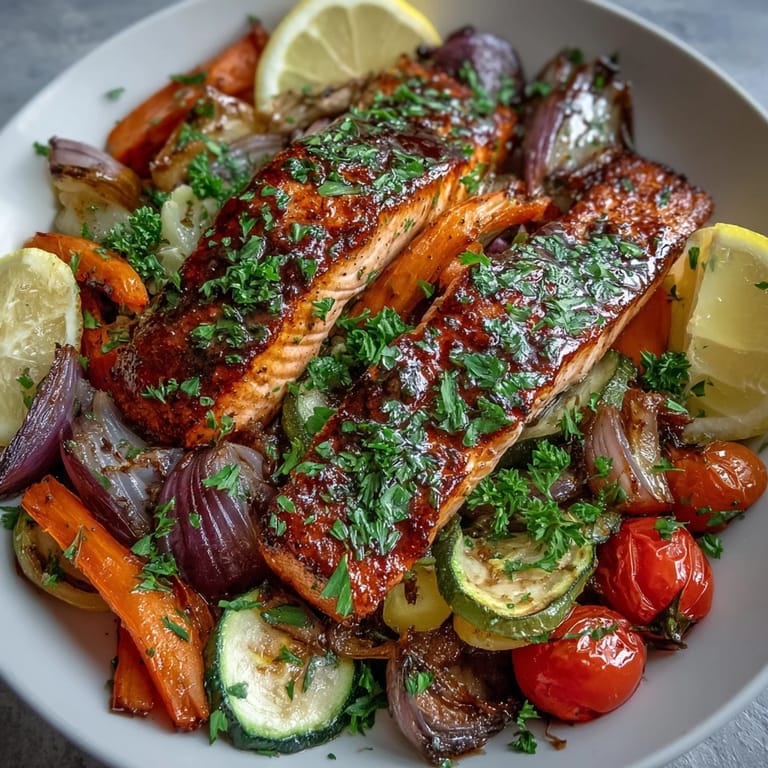
This dish asks almost nothing of you except good timing and paying attention to your oven for 25 minutes total. There's no standing over a stove, no complicated sauces, no plating gymnastics. You prep, you roast, you eat, and your kitchen doesn't look like a disaster. It's the kind of dinner that tastes intentional and healthy without feeling like a punishment.
- You can prep all the vegetables in the morning and store them in a container, then just assemble when you're ready to cook.
- Leftovers taste great cold the next day and make an excellent lunch bowl with a dollop of something creamy.
- This recipe scales beautifully, so doubling it for guests is just a matter of getting a second sheet pan in the oven.
 Save to Pinterest
 This is the dinner I make when I want to feel like I'm taking care of myself, or when I want to feed someone else something that feels both simple and special. It never disappoints.
Recipe FAQs
- → What vegetables work best for sheet pan cooking?
Root vegetables like carrots, onions, and potatoes along with bell peppers, zucchini, and cherry tomatoes work beautifully. They roast evenly and caramelize nicely alongside the salmon.
- → How do I know when the salmon is done?
The salmon is ready when it flakes easily with a fork and reaches an internal temperature of 145°F. The flesh should be opaque and slightly pink throughout.
- → Can I prepare this ahead of time?
You can chop the vegetables and season the salmon up to a day in advance. Store them separately in the refrigerator and assemble just before roasting for best results.
- → What other fish can I use instead of salmon?
Arctic char, trout, or cod fillets work well with similar cooking times. Adjust cooking time slightly based on thickness, checking for doneness after 12 minutes.
- → How should I store leftovers?
Store cooled salmon and vegetables in an airtight container for up to 3 days. Reheat gently in the oven at 350°F or enjoy cold over salad greens.