 Save to Pinterest
 My roommate in college used to make this every Sunday night using whatever was left in the fridge. The smell of kimchi hitting hot oil would wake me up from across the apartment. One night she taught me her trick: day-old rice and a screaming hot pan. I've been making it ever since, and it's saved me on more rushed weeknights than I can count.
I made this for my brother after he came back from a long trip, exhausted and hungry. He sat at the counter watching me work, and by the time I cracked the eggs into the pan, he was already reaching for a fork. We ate straight from the skillet, laughing about how much better this was than the fancy dinner we'd planned. That night it became his most requested dish.
Ingredients
- Cold cooked white rice: Day-old rice is key because it's drier and won't turn mushy when you stir-fry it, giving you those perfect separated grains.
- Napa cabbage kimchi: The soul of this dish, providing tangy, funky, spicy flavor that deepens as it caramelizes in the hot pan.
- Kimchi juice: Don't throw it out, this liquid gold adds extra umami and ties everything together at the end.
- Eggs: They add richness and a silky texture that balances the sharp kimchi.
- Onion and green onions: The onion adds sweetness, while green onions bring a fresh, sharp bite when folded in at the end.
- Carrot: Optional but adds a touch of color and a hint of natural sweetness.
- Gochujang: This fermented chili paste is thick, slightly sweet, and deeply savory, it's what makes the dish unmistakably Korean.
- Soy sauce: Adds salty depth and rounds out the flavors without overpowering the kimchi.
- Toasted sesame oil: A few drops at the end bring a nutty aroma that makes the whole dish smell like home.
- Vegetable oil: A neutral oil with a high smoke point, perfect for the high heat you need.
- Sugar: Just a pinch to balance the acidity of the kimchi if it's especially sour.
- Optional additions: Pork belly, Spam, or tofu add heartiness, while sesame seeds and seaweed make it look and taste restaurant quality.
Tired of Takeout? 🥡
Get 10 meals you can make faster than delivery arrives. Seriously.
One email. No spam. Unsubscribe anytime.
Instructions
- Sauté the aromatics:
- Heat your oil until it shimmers, then toss in the onion, white parts of the green onion, and carrot. Let them sizzle and soften for a few minutes, stirring occasionally so nothing burns.
- Stir-fry the kimchi:
- Add the chopped kimchi and let it cook until the edges start to darken and smell irresistible. This caramelization is where the magic happens.
- Add the seasonings:
- Stir in the gochujang, soy sauce, and sugar if you're using it. Mix everything together until the paste melts into the kimchi.
- Scramble the eggs:
- Push everything to one side of the pan, crack your eggs into the empty space, and scramble them quickly. They should be just barely set when you fold them in.
- Break up the rice:
- Add the cold rice and use your spatula to break apart any clumps. Pour in the kimchi juice and stir-fry everything together until the rice is hot and evenly coated in that spicy, tangy sauce.
- Finish with sesame oil and greens:
- Drizzle the sesame oil over the top and fold in the green parts of the green onions along with any optional meat or tofu. Give it one last toss.
- Taste and adjust:
- Take a bite and see if it needs more soy sauce, gochujang, or a pinch of salt. Trust your palate.
- Serve and garnish:
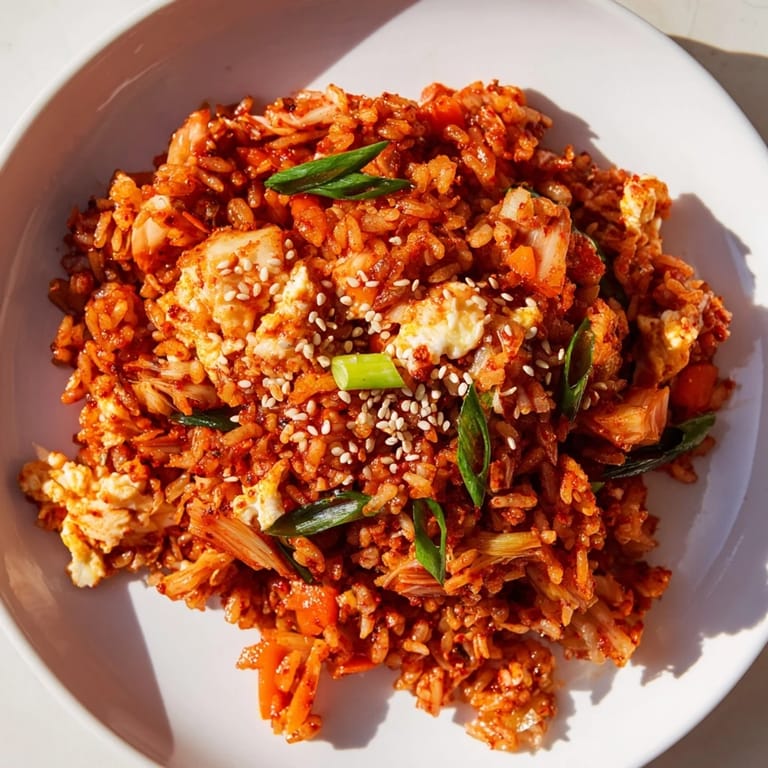
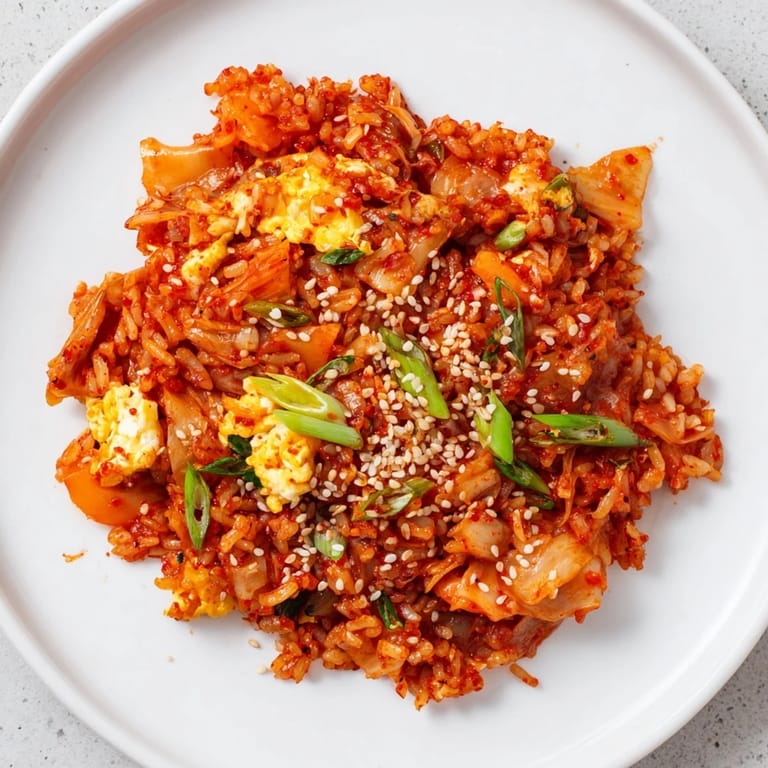
- Plate it up hot, then sprinkle sesame seeds, extra green onions, and roasted seaweed on top. Eat it while it's still steaming.
 Save to Pinterest
 One rainy evening, I made this for a friend who was going through a rough patch. We sat on the floor with bowls in our laps, and she told me it was the first thing that had tasted good to her in days. We didn't talk much after that, just ate and listened to the rain. Sometimes a simple bowl of fried rice can say more than words.
Choosing the Right Kimchi
Not all kimchi is created equal, and the kind you use will change the flavor of your fried rice. I prefer kimchi that's been fermenting for at least a week because it has more tang and funk, but if yours is super fresh, just add a little extra juice or a splash of rice vinegar. Check the label if you're vegetarian or vegan, some brands sneak in fish sauce or shrimp paste. The crunchier the kimchi, the more texture you'll get in the finished dish.
Making It Your Own
This recipe is incredibly forgiving and practically begs you to improvise. I've thrown in leftover grilled chicken, crumbled bacon, even mushrooms and zucchini when I needed to clean out the crisper drawer. If you want it richer, fry an extra egg sunny-side up and place it on top so the yolk runs into the rice. For a vegan version, swap the eggs for crumbled firm tofu and use a vegetarian kimchi. You can also dial the heat up or down by adjusting the gochujang, just taste as you go.
Serving and Pairing Suggestions
I usually serve this straight from the pan with a cold beer or a cup of green tea on the side. It's hearty enough to stand alone, but it also pairs beautifully with simple banchan like cucumber salad or steamed edamame. If you're feeding a crowd, double the recipe and keep it warm in a low oven while you fry eggs individually for each person. Leftovers reheat surprisingly well in a hot skillet with a splash of water to loosen things up.
- Top with a fried egg for extra richness and a runny yolk that coats every bite.
- Serve alongside pickled radish or a quick cucumber salad to cut through the richness.
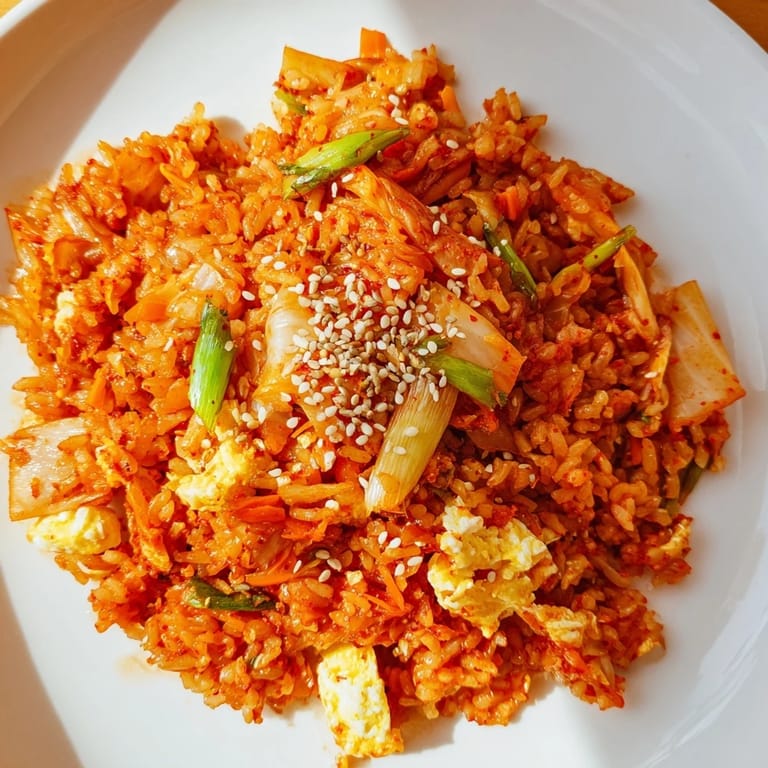
- Garnish generously with sesame seeds and seaweed, they add texture and make it look like you tried harder than you did.
 Save to Pinterest
 This dish has pulled me through late nights, lazy Sundays, and moments when I just needed something warm and alive on a plate. I hope it does the same for you.
Recipe FAQs
- → Can I use fresh rice instead of day-old rice?
Day-old refrigerated rice works best because it's drier and separates easily when stir-fried. Fresh rice tends to clump. If using fresh rice, spread it on a plate to cool completely before cooking, then refrigerate for at least an hour.
- → How spicy is this dish?
The heat level depends on your gochujang brand and quantity. Start with 1.5 tablespoons if you prefer milder flavors, then adjust upward. Adding a pinch of sugar helps balance the spice and acidity from the kimchi.
- → What are good protein additions?
Cooked pork belly, Spam, tofu, or leftover cooked chicken all work well. Dice proteins into small pieces and add them when folding in the green parts of green onion. For vegetarian versions, omit eggs and use extra-firm tofu scrambled instead.
- → Can I make this vegan?
Yes. Omit eggs entirely and scramble extra-firm tofu instead, pressing it first to remove excess moisture. Use vegetable oil and check that your gochujang and soy sauce are vegan-certified. All other ingredients are naturally plant-based.
- → What should I serve alongside this dish?
Pair with cold Korean lager, green tea, or simple cucumber salad to balance the spice. A bowl of soup, such as miso or seaweed, complements the meal nicely as part of a traditional Korean meal structure.
- → How do I store and reheat leftovers?
Store in an airtight container in the refrigerator for up to 3 days. Reheat gently in a skillet over medium heat with a splash of water or extra sesame oil to prevent drying out. The flavor deepens as it sits, making it excellent for next-day meals.